
HACCP Certificate for Food Importers: How to Verify a Supplier's HACCP Claim
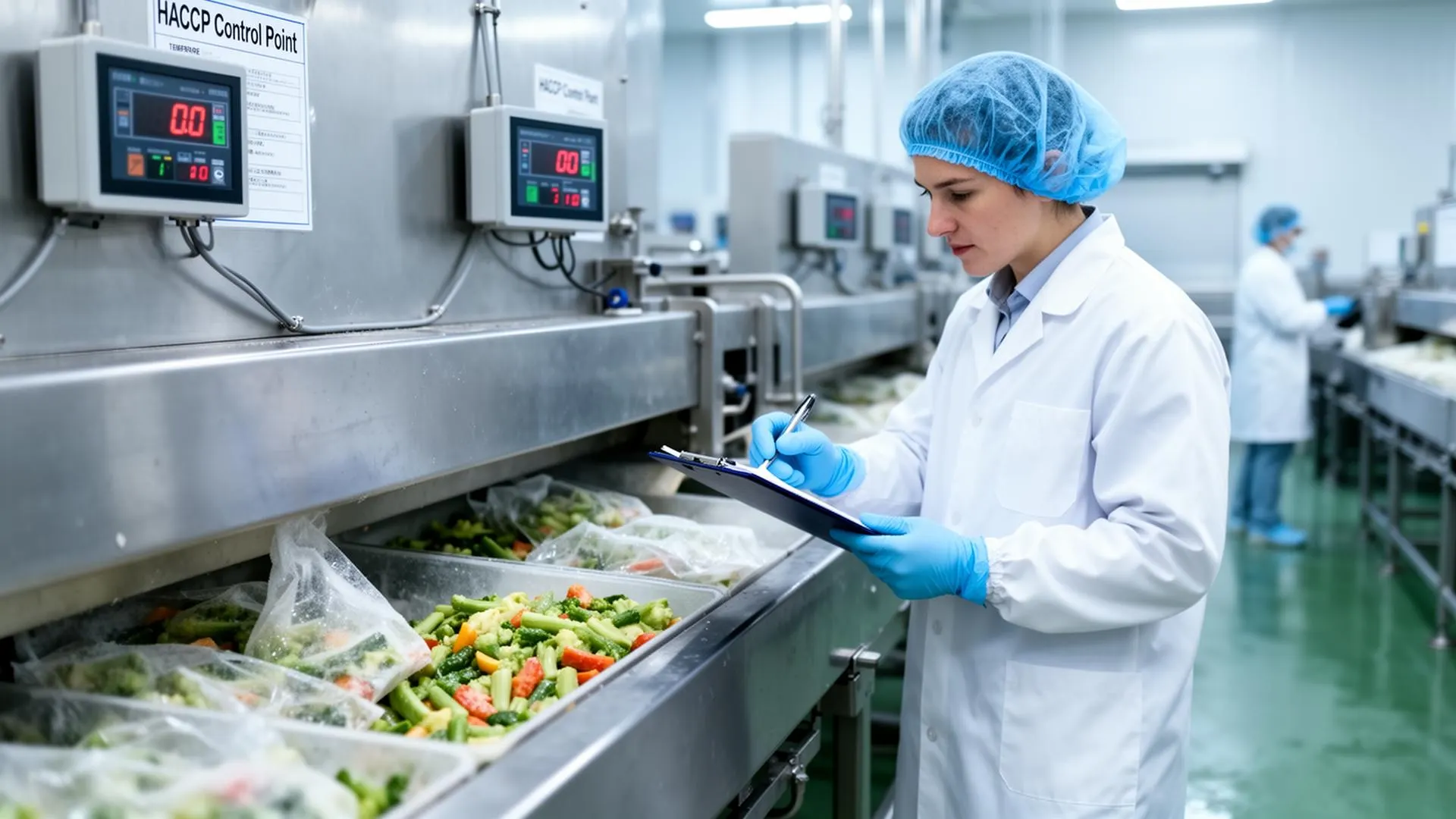
HACCP - Hazard Analysis and Critical Control Points - is the most commonly claimed food safety certification in international trade, and also the most commonly misunderstood. It is not a brand, not a body, and not a single certificate. It is a methodology that any food manufacturer can implement, and one that retailers and regulators expect as a baseline for any supplier shipping food across borders. This guide explains what HACCP actually is, how to verify a supplier's claim, and where it fits alongside more rigorous schemes like BRCGS, IFS, FSSC 22000, and ISO 22000.
What HACCP Actually Is
HACCP is a systematic, preventive approach to food safety developed in the 1960s by NASA and Pillsbury to ensure astronauts did not get food poisoning in space. The methodology was published as a Codex Alimentarius standard in 1993 and is now the legal baseline for food production in the EU, US, UK, Canada, Australia, and most major economies.
The seven HACCP principles: 1. Conduct a hazard analysis (biological, chemical, physical hazards) 2. Identify critical control points (CCPs) where hazards can be prevented or eliminated 3. Establish critical limits at each CCP (e.g., minimum cooking temperature) 4. Establish monitoring procedures 5. Establish corrective actions when limits are exceeded 6. Establish verification procedures 7. Establish record-keeping and documentation
A producer who has implemented these seven principles, documented them, and had them audited by a third-party body can claim HACCP certification.
HACCP vs BRCGS, IFS, FSSC 22000, ISO 22000
HACCP is the methodology. The schemes below are full audit standards built on top of HACCP that add management system, infrastructure, and operational requirements:
ISO 22000: International food safety management standard. Adds management system requirements (document control, internal audits, management review). Audited by accredited certification bodies.
FSSC 22000: ISO 22000 + sector-specific prerequisite programmes (PRPs) like ISO/TS 22002. GFSI-recognised. Common for export-oriented producers.
BRCGS Food Safety: UK-origin retail standard. Strict on factory infrastructure, traceability, and product testing. Required by most UK retailers and many EU retailers. GFSI-recognised.
IFS Food: German/French-origin retail standard, similar scope to BRCGS but with different scoring methodology. Required by many EU retailers. GFSI-recognised.
Practical hierarchy for buyers: - HACCP only → minimum acceptable for foodservice and ingredient buyers - ISO 22000 → strong baseline for most B2B applications - FSSC 22000 → preferred for export to retail and brand customers - BRCGS / IFS → required for UK/EU retail and most private-label programmes
When a supplier claims "HACCP certified," ask which scheme - and request the certificate showing the certification body, scope, and expiry.
How to Verify a Supplier's HACCP Claim
1. Get the certificate, not just the claim. A real certificate names the certification body (e.g., SGS, Bureau Veritas, TÜV, Intertek, DQS), the certified site address, the product/process scope, and the expiry date.
2. Verify the certification body is accredited. Accredited bodies are listed by the IAF (International Accreditation Forum) and national accreditation bodies (UKAS, ANAB, DAkkS). A certificate from a non-accredited body is essentially worthless.
3. Cross-check the certificate online. BRCGS, FSSC 22000, IFS, and ISO 22000 certificates can be verified on the certification body's portal or directly on the scheme owner's database. Ask the supplier to send the verification link.
4. Check the scope. A facility may be certified for one product category but not the one you are buying. Read the scope page of the certificate, not just the cover.
5. Request the most recent audit summary. The audit report (or its summary) shows non-conformities raised at the last audit and how they were closed out. A clean audit with zero non-conformities is unusual - minor non-conformities are normal. Major non-conformities or repeat findings are a warning sign.
Need a quote on the products in this article?
Send us your specs and we'll respond with FOB pricing, certifications, and references within one business day.
What HACCP Does Not Cover
HACCP does not address: - Ethical / labour standards (look for Sedex SMETA or BSCI) - Environmental management (ISO 14001) - Organic certification (EU Organic, USDA Organic, JAS) - Halal / Kosher (separate religious certifications) - Allergen segregation (covered partially by BRCGS / FSSC, not by basic HACCP)
A supplier claiming to be "HACCP certified" is not making any claim about these other dimensions. If they matter for your buyer, ask separately.
Frequently Asked Questions
What does HACCP certification mean?
HACCP (Hazard Analysis and Critical Control Points) certification means a food producer has implemented a systematic preventive food safety methodology, documented their hazard analysis and critical control points, and had the system verified by a third-party audit body.
Is HACCP the same as BRC?
No. HACCP is a food safety methodology. BRCGS Food Safety is a full retail audit standard built on top of HACCP that adds management system, infrastructure, traceability, and product testing requirements. BRCGS is significantly more rigorous than basic HACCP certification.
How do I verify a supplier's HACCP certificate?
Request the full certificate (not just a logo claim), confirm the certification body is IAF-accredited, verify on the scheme owner's online database where available, check the scope covers your specific product, and request the last audit summary showing any non-conformities and closures.
Is HACCP enough for EU food imports?
HACCP is the legal minimum under EU regulation 852/2004, but most EU retailers and major food manufacturers require GFSI-recognised certification (BRCGS, IFS, FSSC 22000) on top of HACCP. For foodservice and ingredient B2B applications, HACCP plus ISO 22000 is often sufficient.
Source from Egypt with confidence
Alliance Foods supplies importers across Europe, the GCC, the UK, and North America. Get a tailored quote in 24 hours.
Related products
Continue reading
The Complete Guide to Importing Frozen Vegetables from Egypt (2026)
Everything global buyers need to know to source IQF frozen vegetables from Egypt - from supplier vetting to FOB Damietta to landed cost in your warehouse.
Egyptian Frozen Okra Suppliers: A 2026 Buyer's Guide
Egypt is the world's leading exporter of frozen okra. Here is how to find, vet, and contract a supplier without buying from a broker pretending to be a producer.