
The Complete Guide to Importing Frozen Vegetables from Egypt (2026)
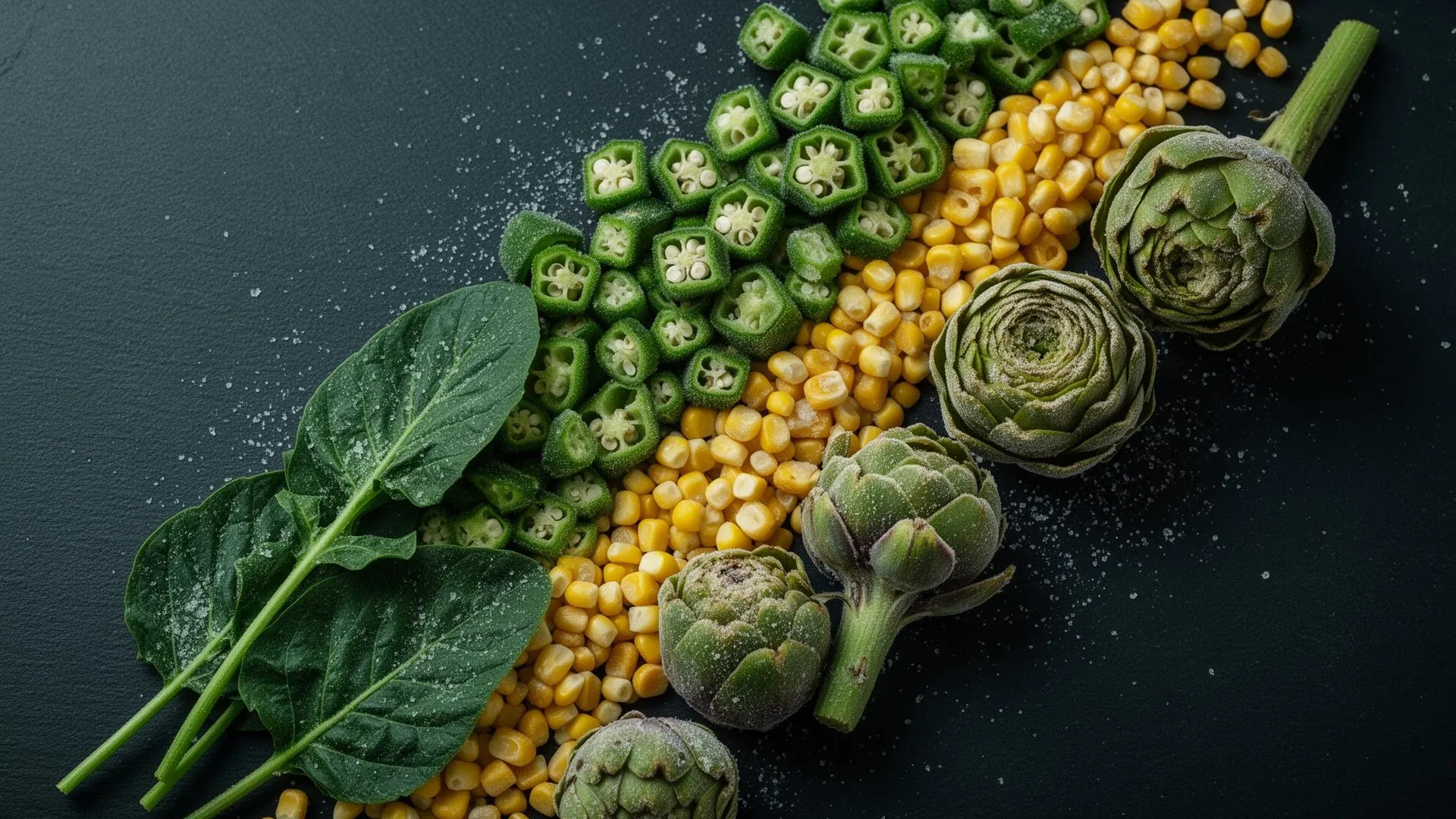
Egypt is now the second-largest exporter of frozen vegetables in the Mediterranean region, supplying buyers across the EU, GCC, UK, and North America with IQF (individually quick frozen) molokhia, okra, artichoke hearts, peas, beans, and seasonal mixes. The combination of year-round growing seasons in the Nile Delta, modern HACCP-certified processing facilities, and competitive FOB pricing has made Egyptian frozen vegetables a strategic alternative to suppliers in Poland, China, and Morocco. This guide walks you through every stage of the import process - from identifying the right supplier to clearing customs in your destination port - based on real export practices used by Alliance Foods and our producer partners.
Why Egypt for Frozen Vegetables in 2026
Egypt's frozen vegetable exports grew 18% year-over-year in 2025, driven by three structural advantages competitors can't easily replicate.
Geography: The Nile Delta produces multiple harvests per year for vegetables that grow seasonally elsewhere. Molokhia, okra, and green beans are harvested 8–10 months out of every 12, smoothing supply and reducing the price volatility European buyers face when sourcing from single-season regions.
Processing infrastructure: Egypt has invested heavily in IQF tunnel freezers, modern packaging lines, and BRCGS / IFS / FSSC 22000 certified facilities concentrated around Cairo, Alexandria, and the 6th of October industrial zone. This means international buyers can find suppliers that meet EU and UK retail-grade audit standards without the supplier-development cost of working with emerging-market producers.
Logistics cost: FOB Damietta or Alexandria to Hamburg, Rotterdam, Felixstowe, or Genoa typically lands 12–22% below comparable FOB pricing from Asia after freight, and 8–14% below Polish FOB after currency adjustments - a structural margin most importers can capture directly.
What Frozen Vegetables Egypt Exports at Scale
The product mix Egypt exports at commercial volume falls into four tiers:
Tier 1 - flagship products (highest volume, deepest supply): IQF molokhia (whole leaf and chopped), IQF okra (whole, sliced, breaded), IQF artichoke hearts and bottoms, IQF green beans (cut and whole), IQF mixed vegetables.
Tier 2 - strong supply, growing demand: IQF spinach (chopped and leaf), IQF cauliflower florets, IQF broccoli florets, IQF peas, IQF sweet corn kernels, IQF cut carrots.
Tier 3 - niche / specialty: IQF colocasia (taro), IQF jew's mallow stems, IQF stuffed vegetables (mahshi-cut), IQF roasted vegetables, organic-certified lines.
Tier 4 - private label and custom cuts: any of the above to buyer specifications - dice size, blanch time, IQF vs. block, retail vs. food-service pack format.
Most importers start with one or two Tier 1 products to validate the supplier relationship before expanding.
Certifications You Should Require
For any serious commercial relationship, your Egyptian supplier should hold (and be able to send you valid certificates for) at minimum:
Mandatory for retail and most food-service buyers: - HACCP (foundational - the bare minimum, expect every legitimate supplier to have this) - ISO 22000 or FSSC 22000 (food safety management) - BRCGS Food Safety or IFS Food (required by virtually all EU and UK retailers)
Strongly recommended: - Halal certification (essential for GCC, valuable everywhere) - Kosher (for North American buyers servicing kosher channels) - Organic certification - EU Organic, USDA NOP, JAS - if you're sourcing organic lines
Document checklist for every shipment: - Phytosanitary certificate (issued by Egypt's Central Administration of Plant Quarantine) - Health certificate from Egyptian Ministry of Health - Certificate of origin (Egyptian Chamber of Commerce) - Commercial invoice and packing list - Bill of lading - Halal certificate per shipment if you're a halal buyer
Always verify certificates directly with the issuing body. Asking for the certificate is not enough - request the certificate number and check it on the certifier's website. This is the single highest-ROI vetting step you can take.
MOQ, Pricing Structure, and Incoterms
Minimum order quantity (MOQ): Most Egyptian frozen vegetable suppliers quote per 40' reefer container (approximately 24 metric tonnes for IQF vegetables, depending on bulk density). Smaller MOQs (20' reefer, ~12 MT, or LCL pallets) are available but carry a 15–30% per-kilo premium and longer lead times. Plan around full 40' loads for best pricing.
Pricing - what's included: Typical FOB quotes in 2026 include the product, IQF processing, primary packaging (bulk poly bags inside cartons, default 10kg or 20kg), palletization, loading at port, and Egyptian export documentation. They do not include freight, destination clearance, duty, or insurance.
Common Incoterms: - FOB Damietta / Alexandria - most common, you arrange freight and insurance - CIF [destination port] - supplier arranges freight + insurance, more convenient but you lose visibility on freight rate - CFR - like CIF without insurance - DDP - supplier handles everything to your warehouse (rare for first-time buyers, expensive premium, but valuable if you don't have an import operation)
Payment terms: - First order: 30% T/T deposit, 70% against scan of B/L (industry standard) - After 2–3 successful orders: negotiate 100% L/C at sight or D/P - Open account and longer credit terms only develop after 6–12 months of reliable trade history
Avoid suppliers who demand 100% upfront before shipment - this is a major red flag in legitimate Egyptian export trade.
Need a quote on the products in this article?
Send us your specs and we'll respond with FOB pricing, certifications, and references within one business day.
Shipping, Lead Times, and Cold Chain
Lead time from PO to vessel sailing: 21–35 days for standard IQF products in stock or in active production. Add 10–14 days for custom specifications, private label packaging, or organic-certified lines that need additional lot release.
Sea freight transit times from Egyptian ports (typical 2026): - Egypt → Northern Europe (Hamburg, Rotterdam): 8–12 days - Egypt → UK (Felixstowe, Southampton): 10–14 days - Egypt → Mediterranean Europe (Genoa, Marseille): 4–7 days - Egypt → Saudi Arabia / UAE: 6–10 days - Egypt → US East Coast: 18–25 days - Egypt → US West Coast: 28–35 days
Cold chain requirements: All shipments must move at -18°C or colder, continuously. Demand from your supplier: - Reefer container set to -20°C as standard (gives margin for the +/-2°C variance container reefers naturally have) - Pre-cooling of the container before loading (request the pre-cooling temperature log) - Temperature data logger inside the container (Sensitech, Emerson, or equivalent) - log file delivered to you with the B/L - A clear policy on what happens if the data shows a temperature excursion (typically the supplier covers replacement product if excursion exceeds 4 hours above -15°C and is attributable to loading)
A supplier who can't confirm these on day one isn't ready for a serious commercial relationship.
How to Vet an Egyptian Supplier (Without Flying Out)
Most fraud and quality failures trace back to skipping basic supplier vetting. The 7-step protocol below catches >90% of bad actors before you wire any money.
1. Verify legal entity. Ask for the Egyptian commercial registration number and the export license number issued by GOEIC (General Organisation for Export and Import Control). Both are publicly verifiable.
2. Verify certifications independently. Don't accept PDFs at face value - ask for the certificate number and look it up on the certifier's online registry (BRCGS Directory, FSSC 22000 portal, IFS database). Expired or mismatched certificates are common.
3. Request a video factory tour. Have them walk you through the IQF tunnel, the packaging line, the cold storage, and the loading dock - live, not pre-recorded. Take screenshots. Compare against the photos on their website. Mismatches are a red flag.
4. Request three references in your geography (or the closest geography they currently export to). Email those references directly - don't call numbers the supplier gave you.
5. Order a paid sample shipment first if budget allows. A 200kg LCL sample order is the cheapest insurance you can buy. Test the product, the documentation quality, and the responsiveness of the supplier's team before committing to a 24 MT first order.
6. Run a third-party pre-shipment inspection (SGS, Bureau Veritas, Intertek, or Cotecna) on your first 1–2 commercial orders. Cost is typically $400–$800 per inspection. They verify product condition, quantity, packaging, and loading temperature.
7. Visit if the relationship survives 12 months. A face-to-face visit after a year of successful trade locks in pricing leverage and unlocks better payment terms.
Common Mistakes First-Time Importers Make
Mistake 1 - Choosing the lowest quoted price. The cheapest FOB quote is almost always the supplier with the highest claim rate, slowest documentation, or weakest cold chain control. Aim for the median quote from suppliers who pass certification verification.
Mistake 2 - Underestimating documentation time. First-time buyers consistently underestimate how long it takes to assemble import permits, pre-notification (TRACES NT for EU, common health entry document for UK), halal certificates, and origin paperwork. Build a 10-day buffer into your first import schedule.
Mistake 3 - Ignoring climate seasonality. Egyptian summer (June–September) puts extra stress on cold chain logistics - both at the port and in transit. First-time importers should plan their first shipment for October–April when the failure rate is structurally lower.
Mistake 4 - Skipping product specifications. A casual PO that says "IQF okra, 24 MT" leaves every quality decision to the supplier. Specify: cultivar, size grade (e.g. 2.5–4.5 cm whole), color grade, blanch time, defect tolerance %, packaging weight, carton dimensions, pallet configuration, and target temperature at loading. A 1-page spec sheet eliminates 80% of disputes.
Mistake 5 - No claims process agreed in writing. Agree your claims procedure (notification window, evidence required, resolution mechanism, governing law) in writing before the first shipment leaves Egypt. Trying to negotiate this after a problem occurs is a losing position.
Your Next Step
If you're evaluating Egyptian frozen vegetable suppliers right now, the highest-leverage next move is to request a quote and certification pack from 2–3 vetted exporters and compare them side-by-side on the criteria above - certifications, MOQ, FOB price, payment terms, and references.
Alliance Foods supplies IQF molokhia, okra, artichoke hearts, mixed vegetables, and custom-cut frozen vegetable lines to importers across Europe, the GCC, the UK, and North America. Our standard quote pack includes valid BRCGS / FSSC 22000 / Halal certificates, three buyer references in your region, sample-order pricing, and full FOB and CIF quotes for your destination port - typically returned within one business day.
Use the form below or the contact page to start a conversation. We'll respond with a quote and a certification pack within 24 hours.
Frequently Asked Questions
What is the minimum order quantity for frozen vegetables from Egypt?
Standard MOQ is one 40' reefer container (approximately 24 metric tonnes of IQF vegetables). Smaller LCL or 20' container orders are available but typically carry a 15–30% per-kilo premium and longer lead times.
How long does shipping from Egypt to Europe take?
Sea freight from Damietta or Alexandria to Northern European ports (Hamburg, Rotterdam) takes 8–12 days. UK ports (Felixstowe, Southampton) take 10–14 days. Mediterranean ports (Genoa, Marseille) take 4–7 days.
What certifications should an Egyptian frozen vegetable supplier have?
Mandatory: HACCP, ISO 22000 or FSSC 22000, and BRCGS Food Safety or IFS Food for retail buyers. Strongly recommended: Halal (essential for GCC), Kosher for relevant North American channels, and EU Organic / USDA NOP for organic lines.
What payment terms are standard for first-time orders?
30% T/T deposit and 70% against scan of bill of lading is the industry standard for first orders. After 2–3 successful shipments, buyers typically negotiate 100% L/C at sight or D/P terms. Avoid suppliers demanding 100% upfront before shipment.
Which Egyptian frozen vegetables have the strongest year-round supply?
IQF molokhia, okra, artichoke hearts, green beans, and mixed vegetables - these are Egypt's flagship export categories with the deepest production base and most stable year-round availability.
Source from Egypt with confidence
Alliance Foods supplies importers across Europe, the GCC, the UK, and North America. Get a tailored quote in 24 hours.
Related products
Continue reading
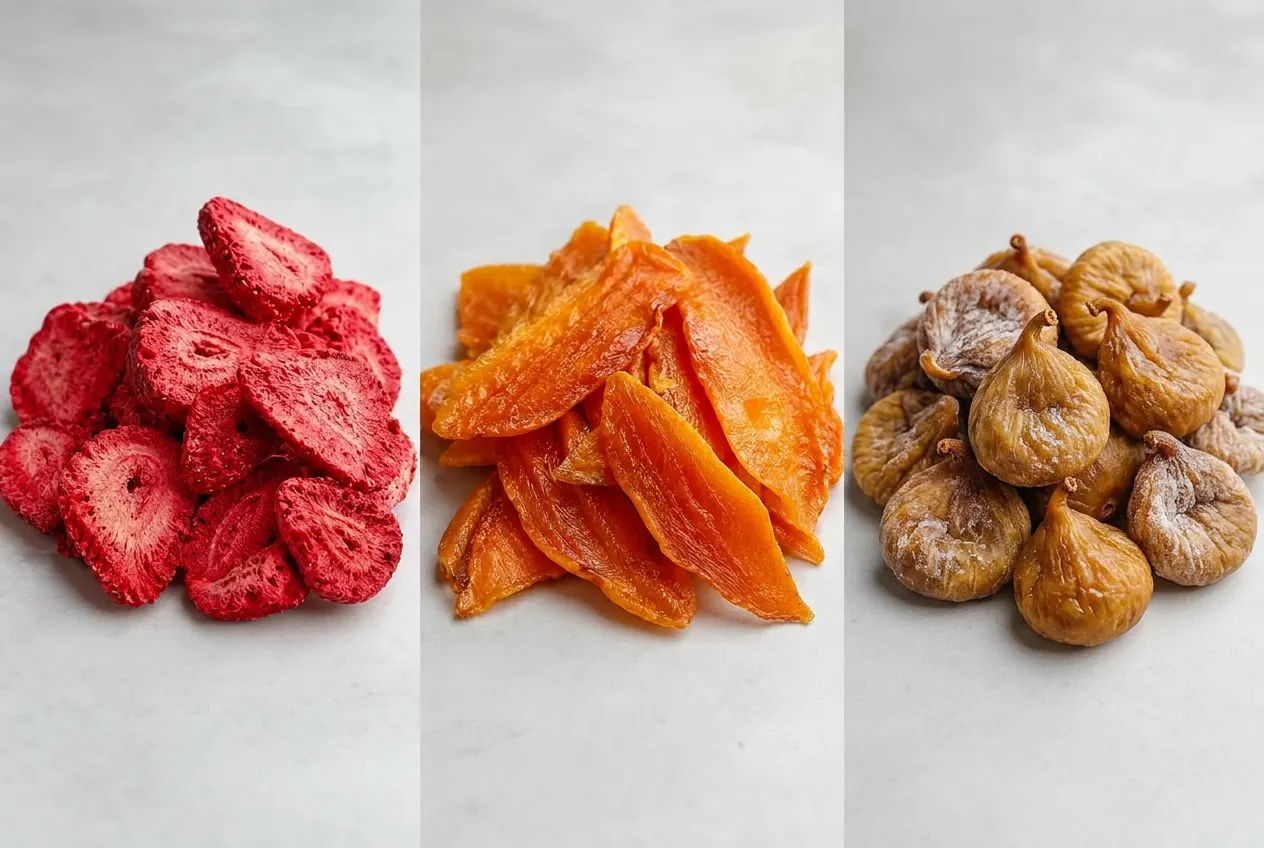
Freeze Drying vs Heat Drying vs Sun Drying: A Buyer's Guide
Three drying technologies, three completely different products. A side-by-side comparison of freeze drying, hot-air heat drying, and sun drying - with the cost, quality, and supply-chain trade-offs that drive the buying decision.

IQF vs Blast Freezing: A Buyer's Guide to Choosing the Right Process
Two industrial freezing processes, two very different outcomes. A practical comparison for buyers specifying frozen produce contracts.