
Why Source IQF Frozen Foods from Egypt? 8 Key Reasons
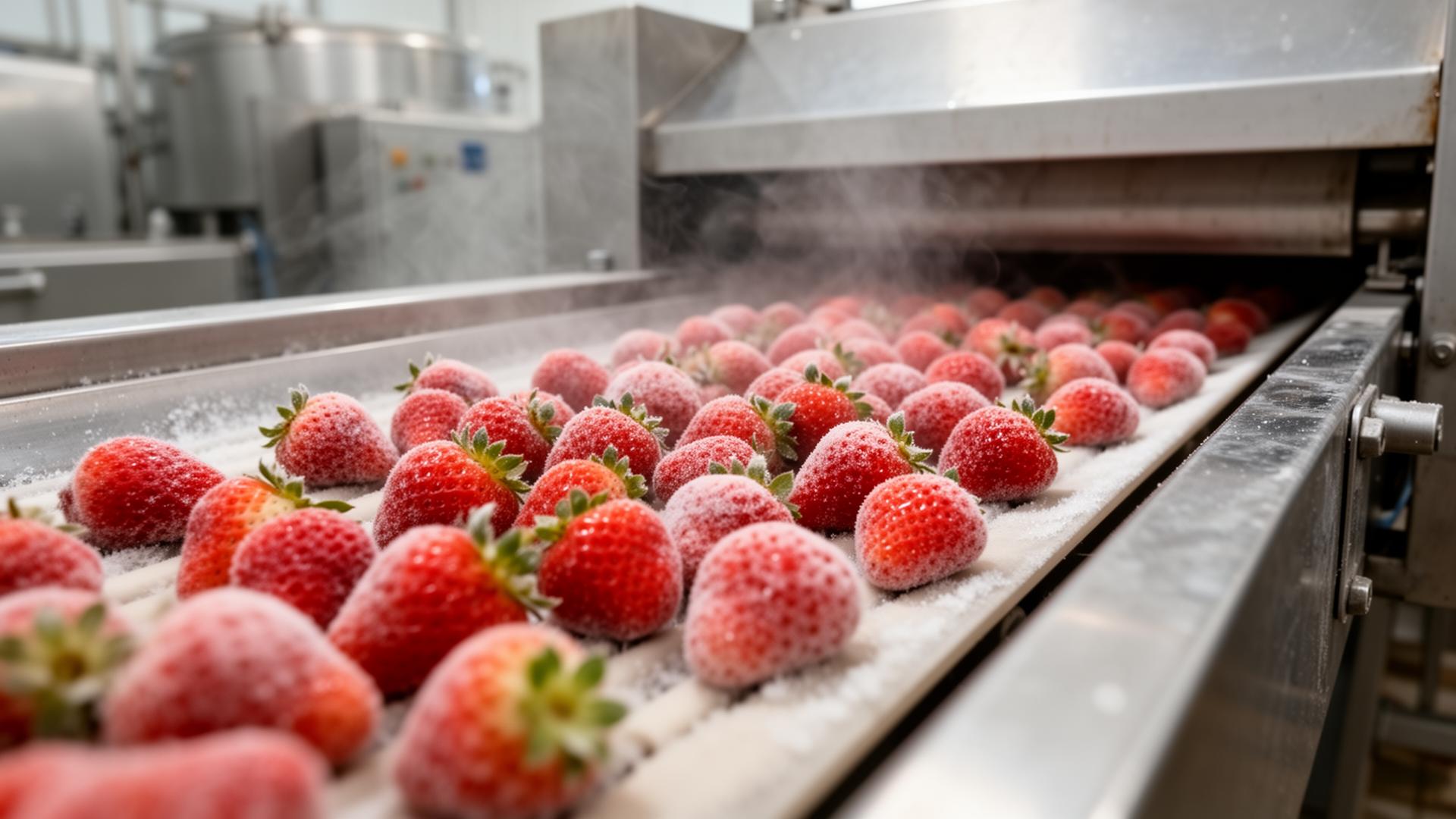
Egypt exported over $1.3 billion in IQF frozen vegetables in 2025. The case for Egyptian sourcing isn't built on geography or labor cost alone - it's built on the convergence of scale, processing infrastructure, certification compliance, and government-backed supply reliability that few origins can match. For European and Gulf procurement teams actively evaluating their supply options, this guide covers 8 concrete, data-backed reasons Egypt has become one of the world's dominant IQF suppliers. No generic praise for "agricultural heritage." No unsourced claims. The numbers cited here come from trade databases and verified media published in 2025–2026, and they tell a specific story about why global buyers are consolidating IQF vegetable and fruit procurement around Egypt. Sourcing IQF frozen food from Egypt means procuring Individually Quick Frozen vegetables, fruits, and produce from Egyptian processing facilities - primarily in the Nile Delta and 6th of October industrial zone - that freeze each product unit separately at −35°C to −40°C, preserving texture, nutrition, and portion integrity across long-haul reefer shipments from Alexandria and Damietta ports.
1. Egypt Is the World's #1 IQF Frozen Strawberry Exporter
Egypt holds approximately 90% of global market share in frozen strawberries (peitrade.com). In 2025, Egyptian frozen strawberry exports reached $672–697 million - an 81% year-on-year increase. No single-origin IQF producer in Europe, Africa, or the Americas comes close to that volume concentration.
For buyers, this level of scale signals something more important than the strawberry number itself: supply chain depth. Multiple large-format IQF processing facilities, established reefer container infrastructure, cold chain logistics corridors, and a competitive domestic export market that keeps pricing transparent. The same infrastructure that enables nearly $700M in frozen strawberry exports underpins Egypt's IQF vegetable, artichoke, and mixed produce supply chains.
This guide focuses specifically on frozen food buyers sourcing IQF product - not fresh produce. The distinction matters: IQF sourcing involves processing facility certification, cold chain continuity, and EU MRL compliance at a different level of complexity than fresh produce procurement. Every competitor article in this space addresses fresh produce. This one doesn't.
2. Year-Round Production Across 20+ IQF Crops
Egypt's Nile Delta agricultural advantage delivers longer active production windows than competing European origins and year-round availability across the IQF crop calendar - reducing the need to source the same SKU from multiple origins across the season.
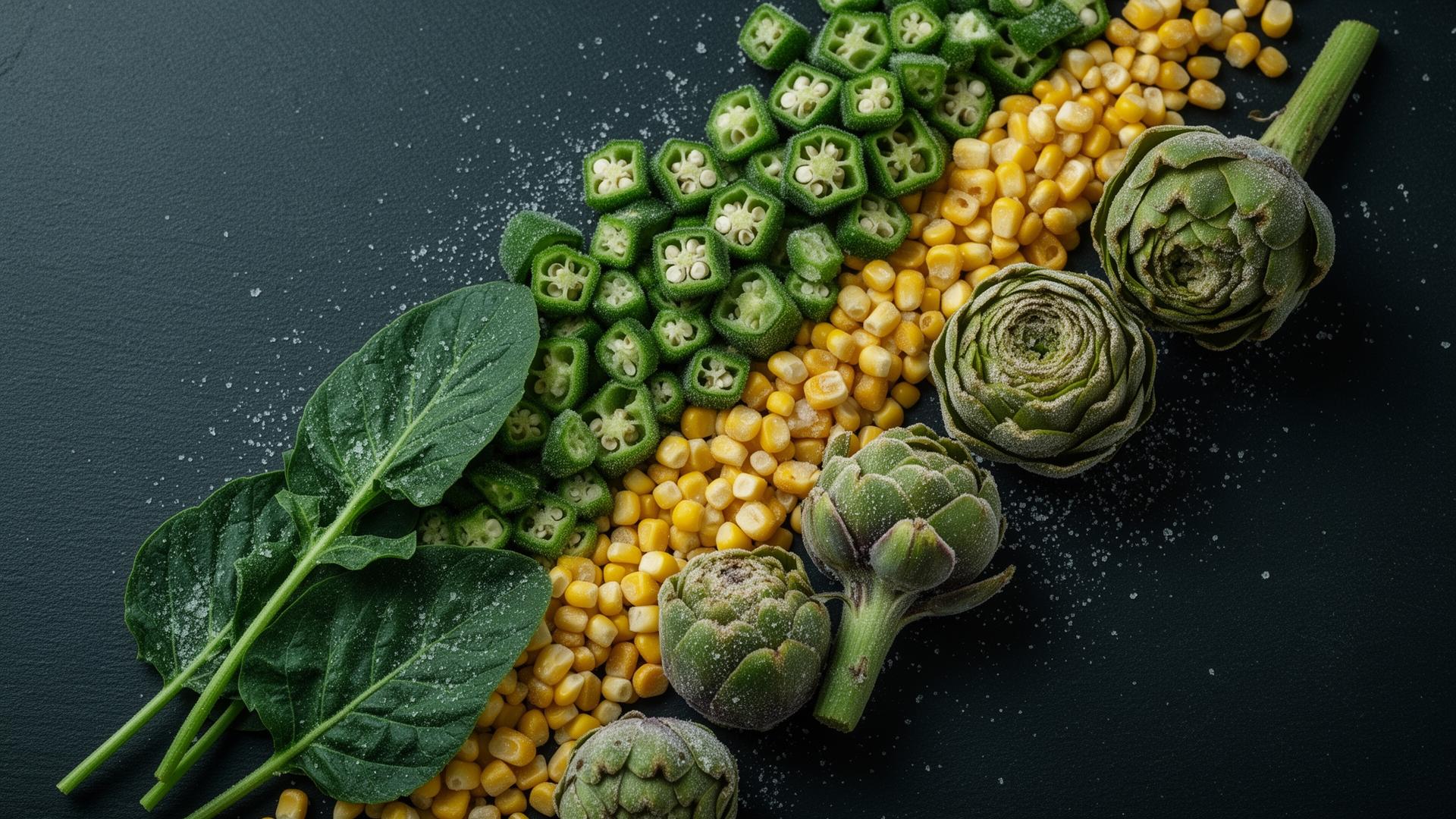
Egypt's Nile Delta combines a sub-tropical Mediterranean climate, alluvial soil enriched by centuries of Nile floodwater deposits, and double-harvest capability across most vegetable crops. IQF crops commercially processed and exported from Egypt include green beans, peas, spinach, okra, artichokes, strawberries, sweet corn, broccoli, cauliflower, molokhia, and mixed vegetable blends. Egypt exported over 580,000 metric tons of IQF and frozen vegetables in 2025, with IQF vegetable exports growing at 7.8% annually since 2020 (freshdi.com).
For buyers managing category procurement across multiple IQF SKUs, single-origin Egyptian sourcing simplifies supplier relationships, consolidates documentation requirements (one certification stack, not several), and reduces freight scheduling complexity.
For a detailed seasonal availability breakdown, see our guide to Egypt's year-round produce supply advantage.
3. Faster Transit Times Than Competing Origins
Sea freight from Alexandria or Damietta to major European ports - Rotterdam, Hamburg, Felixstowe - takes 7–14 days, cutting 3 weeks off the equivalent transit from South American origins and directly reducing cold chain exposure, inventory carrying costs, and required purchase lead times.
For Gulf buyers supplying Dubai, Riyadh, or Jeddah, Egypt's transit advantage is even more pronounced - Damietta to Gulf ports takes 5–10 days, making Egypt the default efficient origin for MENA foodservice and retail supply chains.
For a detailed freight cost and routing comparison between Egypt's two main export ports, see our Alexandria vs. Damietta port guide.
4. Competitive Pricing Without Compromising Quality
Egyptian IQF frozen vegetables consistently land 10–15% cheaper on a delivered (DDP) basis than equivalent product sourced from Spanish, Italian, or French origins - a structural cost advantage rooted in labor, land, and energy inputs, not quality trade-offs.
The input cost advantage is structural: agricultural labor, land rental, energy (natural gas infrastructure), and water access through Nile Delta irrigation systems all favor Egyptian producers relative to Mediterranean EU competitors. Egypt's agriculture sector reached $6.72 billion in market value in 2026, projected to grow to $8.41 billion by 2031 at a 4.59% CAGR (Mordor Intelligence). That investment trajectory - in mechanization, cold chain infrastructure, and processing technology - is compressing the quality gap between Egypt and traditional EU suppliers while preserving the price advantage.
What to benchmark: Compare cost per metric ton delivered DDP to your distribution center, not just FOB Egypt port. The Egyptian price advantage is real but can be partially offset by longer freight routes from a non-EU origin in complex European supply chains. For Gulf buyers, the freight equation doesn't apply - Egypt's cost advantage translates directly to the delivered price.
Need a quote on the products in this article?
Send us your specs and we'll respond with FOB pricing, certifications, and references within one business day.
5. Advanced IQF Processing Technology
Egypt's leading IQF export facilities run the same equipment European buyers expect - spiral and linear IQF tunnels, optical sorting and color-rejection lines, metal detectors, and X-ray inspection systems - all meeting EU hygiene equipment specifications under BRC/BRCGS and ISO 22000 certification.
IQF (Individually Quick Frozen) technology freezes each unit of produce separately using continuous tunnel freezers, typically reaching −35°C to −40°C at the product core within minutes. This is structurally different from block freezing, where produce is frozen in bulk and must be defrosted entirely before use.
BRC/BRCGS and ISO 22000 certification requires these systems to undergo independent third-party audits. Processing facilities in Egypt's 6th of October industrial zone and Nile Delta production clusters hold active certifications verifiable in live databases.
For a technical breakdown of how IQF and blast-freezing differ in practice, see our IQF vs. blast freezing guide.
6. Strong International Certification Compliance
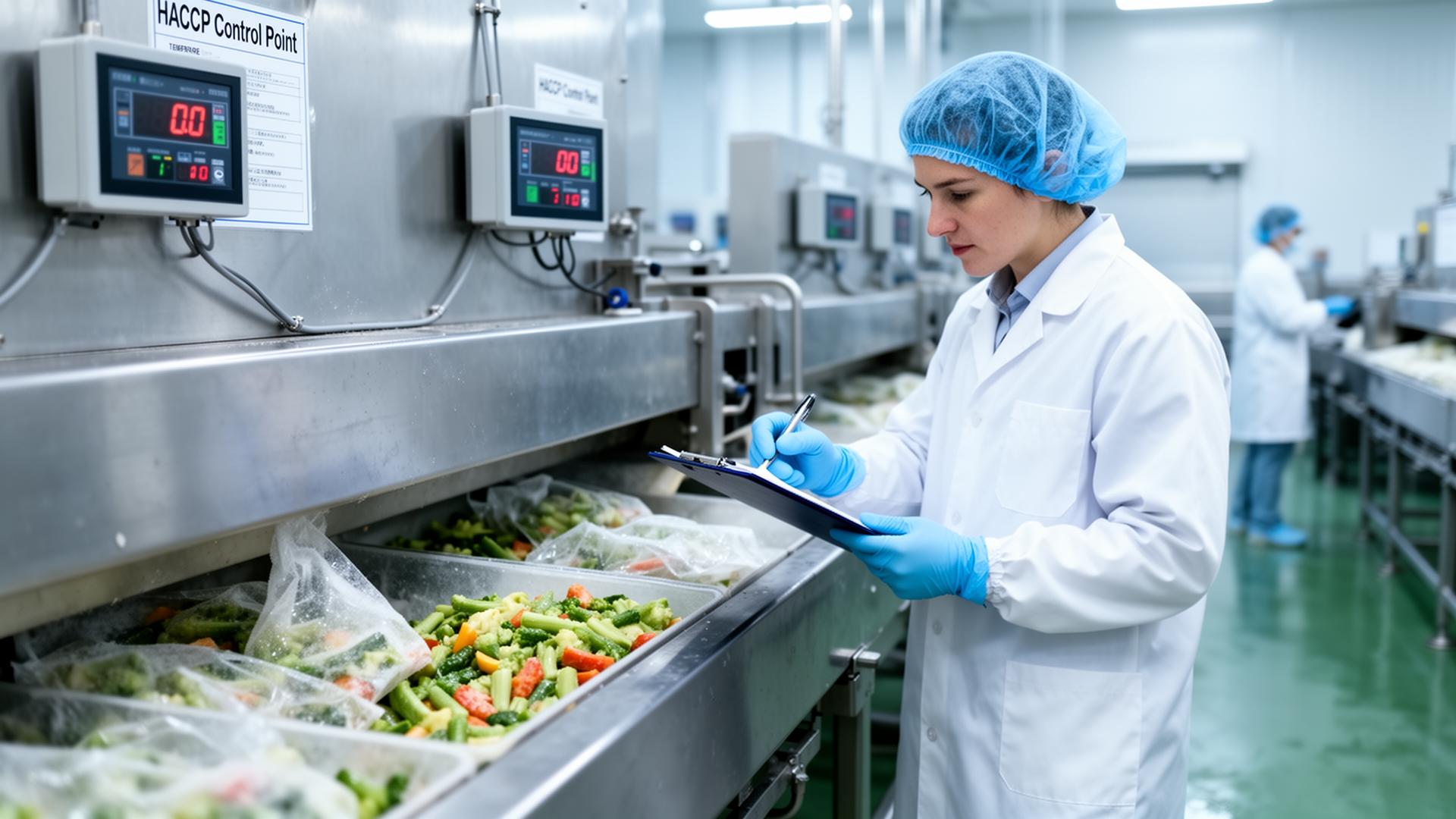
Reputable Egyptian IQF exporters hold the full certification stack required for EU and GCC market access - HACCP, BRC/BRCGS, ISO 22000, GlobalGAP, and Halal - each independently verifiable through public databases before any contract is signed.
Certifications are the first filter applied by EU and GCC procurement teams:
One certification gap that catches EU buyers off guard: EU MRL (Maximum Residue Limit) compliance for pesticide residues is a prerequisite for import, and factory certifications like BRC do not close this gap. GlobalGAP-certified Nile Delta farms maintain pesticide application records that specifically address MRL compliance at the source. Sourcing from an IQF exporter without farm-level GlobalGAP certification introduces a compliance risk that only surfaces at customs - too late to fix.
For a complete certification verification framework with live database links, see our Egyptian food exporter certifications guide. Also see our HACCP certification guide for importers for documentation requirements at the processing level.
7. Egypt's Food Export Growth Is Government-Backed
Egypt's national export target of $19 billion in total food exports by 2030 (AGBI, 2026) is backed by a policy structure that directly affects IQF buyers: port capacity expansion at Alexandria and Damietta, cold chain logistics hubs across the Nile Delta, and export facilitation programs through the Egyptian Export Council and Food Export Council.
Egypt's food exports hit $7 billion in 2025 - up 12% year-on-year (AGBI, 2026). IQF frozen vegetable exports specifically grew at 7.8% annually since 2020. These are not one-off figures - they reflect consistent investment in the infrastructure required to sustain and expand export volumes.
Why government backing matters for procurement teams: An origin where the national government has committed to doubling food export revenue by 2030 is building the port capacity, cold chain facilities, and regulatory frameworks to support that goal. Buyers can plan multi-year supply agreements with greater confidence in supply continuity - not just opportunistic spot purchases that depend on a single season's harvest.
The top destination markets for Egyptian IQF exports - Germany, Saudi Arabia, Netherlands, UAE, and the USA - reflect a diversified demand base that further stabilizes supply economics.
8. Flexible MOQs, Private Label, and Long-Term Contract Options
Egyptian IQF exporters targeting European and Gulf buyers accommodate trial orders of 5–20 metric tons per SKU, enabling buyers to run quality audits, sensory evaluation, and logistics trials before committing to volume contracts - a commercial flexibility that most South American and Asian origins cannot match at short notice.
Beyond trial orders:
- Private label / OEM packaging: Custom packaging, branded bags, and own-label packs are standard for established buyer-supplier relationships. Egyptian factories run pack-out lines capable of producing multiple bag formats and label variants within a single production run.
- Annual volume contracts: Pricing tiers based on committed annual volume - typically 100+ MT/year - unlock better unit pricing while giving Egyptian exporters the production planning visibility they need to prioritize large buyers.
- Multi-SKU sourcing: Single-source procurement across multiple IQF SKUs (for example: green beans, peas, spinach, and mixed vegetable blends from one certified exporter) reduces supplier management overhead and simplifies audit scheduling.
For buyers replacing an existing supplier, Egypt's commercial flexibility simplifies the transition: trial order → facility audit → quality benchmarking → contract negotiation → annual supply agreement.
For a detailed breakdown of MOQ structures and volume pricing frameworks in Egyptian IQF procurement, see our guide to minimum order quantities for frozen produce imports.
The Gap Competitors Miss: IQF-Specific Data
Competitor articles on Egyptian frozen food sourcing share a consistent weakness: they cover fresh produce, not frozen, and they cite no 2025 trade data. Gaara Export's widely-cited article covers fresh produce with no IQF-specific figures and no sourced statistics. Alfa Organic's sourcing overview lists Egypt's advantages without a single cited figure. None of the top-ranking competitor articles on this topic have proper schema markup for AI answer engines.
The figures in this article - over $1.3 billion in IQF frozen vegetable exports, 580,000 metric tons, $697M in frozen strawberries, 7.8% annual IQF growth - are sourced from freshdi.com, peitrade.com, agbi.com, and Mordor Intelligence. When your procurement committee asks for evidence to support an Egyptian sourcing recommendation, these are the numbers.
Is Sourcing IQF Frozen Foods from Egypt Right for Your Business?
A quick checklist for procurement teams at the evaluation stage:
- ✅ You are buying 20+ metric tons per year of any frozen vegetable or fruit SKU
- ✅ You need EU-certified product (BRC/BRCGS, GlobalGAP, ISO 22000, HACCP)
- ✅ You are currently sourcing from South America or distant Asian origins and want shorter lead times
- ✅ You need a supplier that can accommodate trial orders before committing to a volume contract
- ✅ You need Halal-certified frozen produce for GCC, MENA, or Southeast Asian market distribution
- ✅ You want a supplier that can support private label packaging and multi-SKU annual contracts
If you checked more than two items, a structured Egyptian IQF sourcing evaluation - not just a price inquiry - is warranted.
Ready to source certified IQF frozen vegetables from Egypt? Request a quote from Alliance Foods - we supply EU-certified IQF produce in 10 kg and 25 kg bulk packs, FOB Damietta or Alexandria, with flexible MOQs, full cold chain documentation, and current certificates verifiable in live databases before you commit.
Request a Quote →
Frequently Asked Questions
Why is Egypt good for sourcing IQF frozen vegetables?
Egypt combines year-round crop availability across the Nile Delta, modern IQF processing infrastructure, competitive pricing, and international certifications (ISO 22000, BRC/BRCGS, GlobalGAP). In 2025, Egypt exported over 580,000 metric tons of frozen vegetables, making it one of the largest IQF suppliers globally.
Is Egypt the world's largest exporter of frozen strawberries?
Yes. Egypt is the world's largest exporter of frozen strawberries, holding approximately 90% of global market share. In 2025, Egyptian frozen strawberry exports reached $672–697 million - an 81% increase over the previous year, shipped from Alexandria and Damietta ports.
How long does shipping from Egypt to Europe take for frozen food?
Sea freight from Alexandria or Damietta to major European ports typically takes 7–14 days. This is significantly faster than competing origins in South America (25–35 days), reducing cold chain risk and transit costs for EU buyers.
What certifications should I look for when buying frozen food from Egypt?
Look for GlobalGAP (farm-level Nile Delta farms), ISO 22000 or BRC/BRCGS (processing facility), HACCP documentation, and Halal certification (ES 4249/2023 standard) if supplying Muslim-majority markets. Always request current certificates directly - not just listed claims on a website.
What is the minimum order quantity for frozen vegetables from Egypt?
Most reputable Egyptian IQF exporters accept trial orders from 5–20 metric tons per SKU. Annual contract terms often start at 100+ MT with better pricing tiers. Alliance Foods can discuss MOQ flexibility based on your product requirements.
Source from Egypt with confidence
Alliance Foods supplies importers across Europe, the GCC, the UK, and North America. Get a tailored quote in 24 hours.
Related products
Continue reading
The Complete Guide to Importing Frozen Vegetables from Egypt (2026)
Everything global buyers need to know to source IQF frozen vegetables from Egypt - from supplier vetting to FOB Damietta to landed cost in your warehouse.
HACCP Certification Explained: A Practical Guide for Food Importers
HACCP is the foundational food safety framework most exporters claim - but verifying the claim takes more than reading a certificate.