
Why Egypt Leads Global Frozen Strawberry Exports
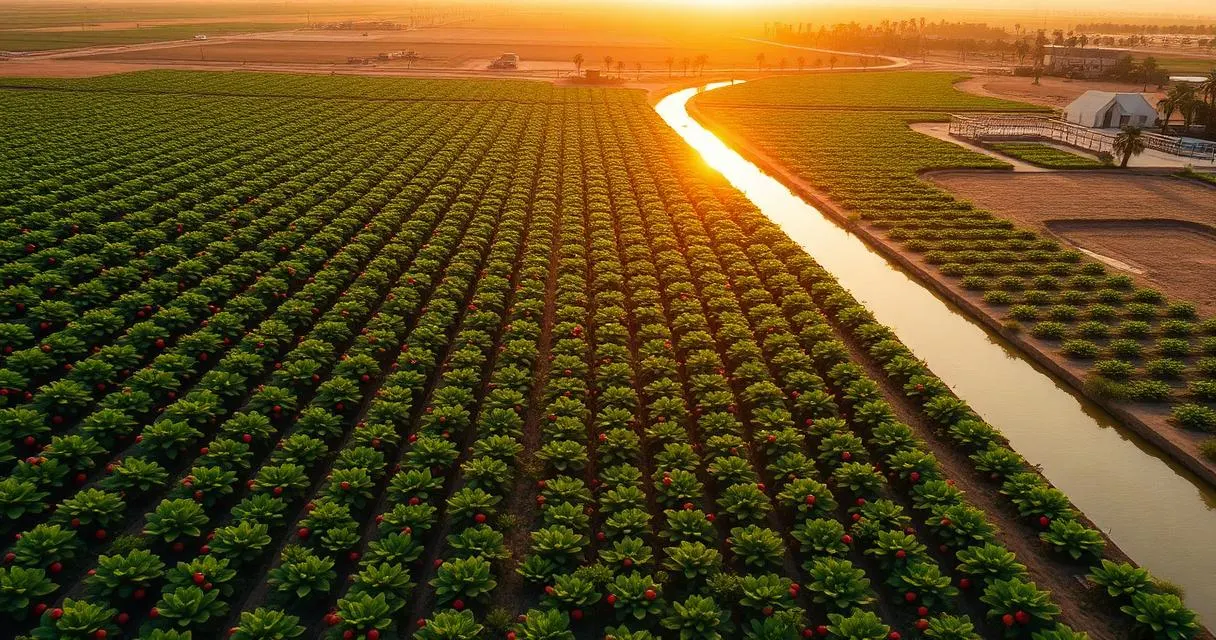
Twenty years ago, Egypt was a marginal player in global frozen strawberry trade. Today it sits behind only Morocco and Mexico in export volume, and ahead of Spain and Poland in price-to-quality ratio for industrial buyers. The shift wasn't an accident - it was driven by four structural advantages that European and North African origins simply cannot match. This article breaks down what those advantages are, what the numbers actually look like, and what it means for buyers building their next-season sourcing plan.
The Harvest Window That Fills the Northern Hemisphere Gap
Egyptian strawberry production runs from November through May, peaking January–April. This is precisely the period when European production (Poland, Spain, Belgium, Netherlands) is at its lowest and most expensive, and when North American supply (California, Mexico) is committed to domestic and Pacific markets.
For European processors and importers, this counter-seasonal supply means:
- Fresh raw material for IQF processing arrives at the lowest-cost point in the global calendar
- Container availability out of Alexandria and Damietta is high during these months - Mediterranean carriers have spare reefer slots
- FOB pricing lands 15–25% below Polish supply (after currency adjustment) and 10–18% below Moroccan FOB during the same window
- Volume commitments are easier to lock in because Egyptian processors are running at peak capacity and want long contracts
This single timing advantage - counter-seasonal alignment with the largest import markets - is the foundation of Egypt's competitive position.
Climate and Soil: Why Brix Levels Run Higher
Egyptian strawberry production is concentrated in the Nile Delta governorates of Beheira, Ismailia, and parts of Sharqia, with expanding production in the new reclaimed land west of Cairo. Three climate factors give Egyptian fruit a measurable advantage:
High solar radiation: 8–10 hours of direct sunlight daily during the growing season, versus 4–6 hours in Northern European production zones. This drives photosynthesis and sugar accumulation in the fruit.
Cool nights, warm days: Daytime highs of 22–28°C and nighttime lows of 8–14°C during peak production. This diurnal swing concentrates flavor compounds and slows respiration after harvest - a quality the IQF process locks in.
Low rainfall, controlled irrigation: Drip irrigation under polytunnel and open-field conditions allows precise water management. Berries develop with lower water content per gram of fruit solids - meaning less ice damage during freezing and lower drip loss on thawing.
The measurable result: Egyptian strawberries average 7.5–9.5° Brix versus 6.0–8.0° Brix for Northern European supply. For jam, dairy fruit prep, and any application where natural sweetness reduces added sugar, this is a meaningful ingredient advantage.
Cultivar Selection Built for Freezing, Not Fresh Eating
European and North American strawberry breeding programs optimize for fresh-market traits: shelf life on supermarket shelves, transportability, and visual presentation. Egyptian breeding and cultivar selection has been driven primarily by export-frozen demand, which has different priorities.
The dominant Egyptian cultivars - Festival, Fortuna, Sensation, and Winter Star - were selected over the past 15 years specifically for:
- Deep red color that holds through the freeze-thaw cycle
- High sugar (Brix) levels for natural sweetness in finished products
- Firm flesh that resists ice-crystal damage during IQF
- Uniform size grading that simplifies processing and packing
- Resistance to enzymatic browning in cut applications (sliced, diced)
For a buyer specifying IQF strawberries for industrial use, this cultivar mix delivers a consistently better-performing raw material than what most European fresh-optimized varieties produce when frozen.
The Cost Structure European Origins Cannot Match
Egypt's FOB pricing on IQF strawberries typically lands 15–25% below Polish supply and 10–18% below Moroccan FOB. The cost gap is not a temporary market condition - it is structural and rooted in three permanent factors:
Land cost: Strawberry-suitable agricultural land in the Nile Delta and reclaimed-land projects costs a fraction of equivalent land in Poland, Spain, or the Netherlands. This flows through to lower farm-gate fruit pricing.
Labor cost: Strawberry harvesting is labor-intensive and cannot be mechanized. Egyptian agricultural labor cost per hour is 60–80% lower than Polish or Spanish equivalents. Picking accounts for 30–40% of farm-gate cost on strawberries - so labor differentials translate directly into FOB pricing.
Energy cost for IQF processing: Subsidized industrial energy in Egypt keeps the per-tonne cost of IQF tunnel operation 25–35% below European processors. This is the single largest line item in IQF processing economics after raw material.
Combined effect: A 1MT pallet of IQF whole strawberries that exits a Polish freezer at €2,400–€2,800 FOB equivalent exits an Egyptian freezer at €1,900–€2,300 FOB Alexandria or Damietta - for the same product specification.
Need a quote on the products in this article?
Send us your specs and we'll respond with FOB pricing, certifications, and references within one business day.
Processing and Cold-Chain Infrastructure
Egypt's frozen-fruit processing capacity expanded dramatically between 2015 and 2024, driven by EU and GCC export demand. The current landscape:
- 30+ commercial-scale IQF facilities with European-grade tunnel freezers (Octofrost, GEA, Marel)
- Cold storage capacity approaching 500,000 tonnes nationally, concentrated near Alexandria, 6th of October City, and Damietta
- BRCGS, IFS, and FSSC 22000 certification is now standard at top-tier facilities - not exceptional
- Reefer container capacity at Alexandria and Damietta has been expanded to handle frozen export volumes through peak season
For buyers, this means the bottleneck is no longer infrastructure - it's identifying the right counterparty among the larger pool of certified exporters now operating.
EU MRL Compliance and Audit Readiness
The single biggest risk in any new origin is residue compliance. Egypt's top-tier strawberry exporters have invested heavily in pesticide management programs since 2018 to meet EU and UK MRL (Maximum Residue Limit) standards.
What top-tier Egyptian suppliers now provide as standard: - Field-level spray records traceable to each lot - Third-party residue testing within 30 days of shipment - BRCGS or IFS audit certificates with current validity - Pre-shipment sample retention for buyer-side verification - Full chain-of-custody documentation from farm to container
For a buyer doing serious due diligence, the question is no longer "can Egyptian product meet EU standards" but "which specific Egyptian supplier has the audit record to prove it." That's a normal supplier-vetting question, not an origin-risk question.
Where Egyptian Strawberry Supply Is Heading
Three trends are shaping the next five years:
Capacity expansion: New IQF lines are coming online in 2026 and 2027, mostly in the reclaimed-land projects west of Cairo. This will further compress IQF pricing and push Egypt past Morocco in export volume by 2028 on current trajectory.
Cultivar diversification: Trials of newer varieties (San Andreas, Albion) are expanding the size grade range and pushing Brix levels higher. Expect more 35mm+ size grades to become reliably available within two seasons.
Premium positioning: A small but growing segment of Egyptian exporters is positioning organic-certified and EU-Bio-certified product specifically for Northern European premium retail. FOB pricing is 30–45% above conventional but still below European organic supply.
For buyers, the implication is straightforward: Egypt is consolidating its position as the cost-efficiency leader in frozen strawberries, and is starting to compete on quality and certification too. Both directions create more supplier options, not fewer.
Frequently Asked Questions
Is Egypt the largest exporter of frozen strawberries?
Egypt is currently a top-three global exporter of frozen strawberries by volume, behind Morocco and Mexico. By 2028, on current capacity expansion trends, Egypt is expected to overtake Morocco and become the second-largest origin globally.
When is Egyptian strawberry season?
Egyptian strawberry production runs November through May, with peak harvest January through April. This is counter-seasonal to European supply, which is why Egyptian frozen strawberries fill the Northern Hemisphere supply gap during winter and early spring.
Why are Egyptian strawberries cheaper than European strawberries?
Egyptian FOB pricing on IQF strawberries runs 15–25% below Polish supply due to lower land costs, lower labor costs (strawberry harvesting is labor-intensive), and lower industrial energy costs for IQF processing. The cost gap is structural, not a temporary market condition.
Are Egyptian strawberries EU compliant?
Top-tier Egyptian strawberry exporters meet EU MRL (Maximum Residue Limit) standards and operate BRCGS, IFS, or FSSC 22000-certified facilities. Always require recent third-party residue testing (within 30 days of shipment) and a current audit certificate from any Egyptian supplier.
What strawberry cultivars does Egypt grow for export?
Festival, Fortuna, Sensation, and Winter Star are the dominant export cultivars, selected specifically for deep color retention through freeze-thaw, high Brix (7.5–9.5°), firm flesh that resists ice-crystal damage, and uniform size grading.
Source from Egypt with confidence
Alliance Foods supplies importers across Europe, the GCC, the UK, and North America. Get a tailored quote in 24 hours.
Related products
Continue reading
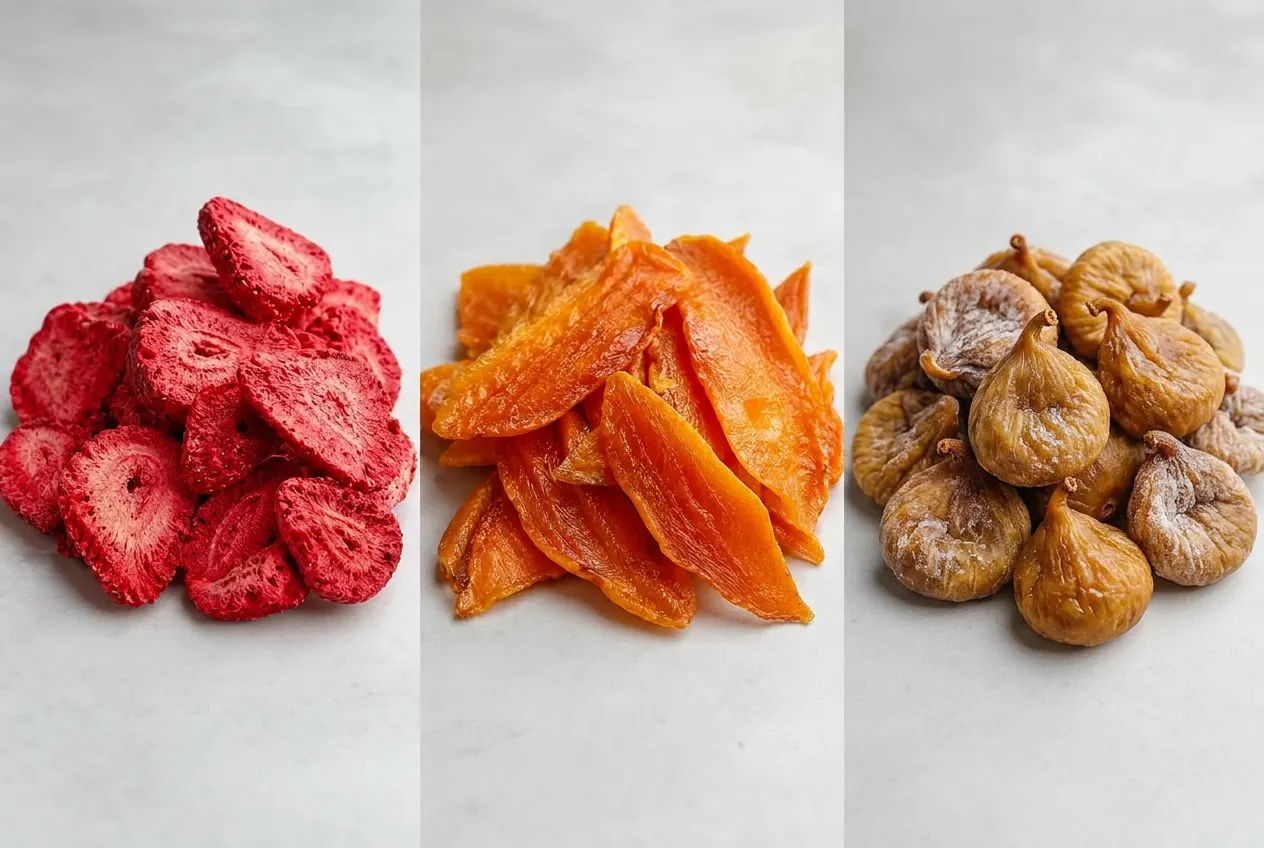
Freeze Drying vs Heat Drying vs Sun Drying: A Buyer's Guide
Three drying technologies, three completely different products. A side-by-side comparison of freeze drying, hot-air heat drying, and sun drying - with the cost, quality, and supply-chain trade-offs that drive the buying decision.
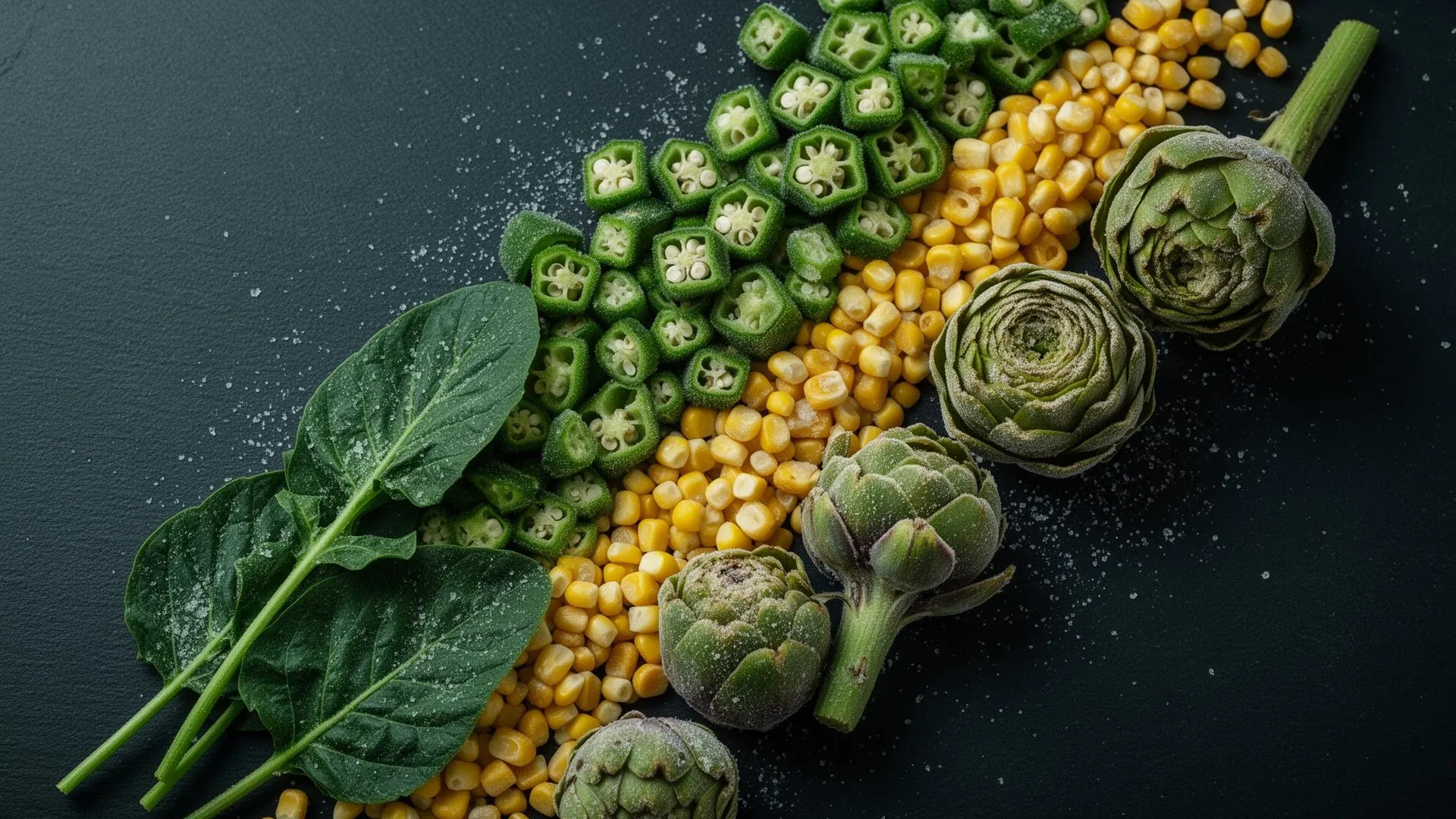
The Complete Guide to Importing Frozen Vegetables from Egypt (2026)
Everything global buyers need to know to source IQF frozen vegetables from Egypt - from supplier vetting to FOB Damietta to landed cost in your warehouse.