
MOQ Explained: Minimum Order Quantities for Frozen Produce Imports

For new buyers entering frozen produce sourcing, the most frequent friction point is MOQ - the minimum order quantity a supplier will accept. Frozen produce MOQs are almost always quoted as one container-load, which sounds arbitrary until you understand the underlying reefer logistics economics. This guide explains why container-load MOQs exist, what fits in a 40-foot reefer container, and the three legitimate routes a small or new buyer can use to ship sub-MOQ volumes.
Why Frozen MOQs Are Container-Load
Frozen produce ships at -18°C in refrigerated containers (reefers). Three economic facts make container-load the practical minimum:
1. Reefer freight is priced per container, not per kilo. A 40-foot high-cube reefer from Damietta to Rotterdam costs roughly the same whether it carries 5 MT or 25 MT. Below container-load, your per-kilo freight cost explodes.
2. Cold chain integrity requires dedicated reefer capacity. A reefer cannot share a container with dry goods, and cannot be partially loaded with multiple shippers' product without raising temperature-deviation risks every time it is opened.
3. Loading and customs costs are per-shipment, not per-kilo. Origin port handling, BL issuance, customs documentation, and destination handling cost €400–€900 regardless of weight. On a full container these costs disappear into per-kilo figures; on a 5 MT shipment they are punishing.
The result: most exporters set MOQs at 1× 40-foot reefer (~22–25 MT IQF, ~24–26 MT for concentrates) because anything smaller is uneconomic for both sides.
What Fits in a 40-Foot Reefer
A standard 40-foot high-cube reefer has internal dimensions of roughly 11.6 × 2.3 × 2.55 m, with a usable payload of about 27 MT and a cubic capacity of about 67 m³.
Typical IQF loads (Egypt FOB): - IQF strawberries, 10 kg cartons on EUR pallets: 22–23 MT (20 pallets, 110 cartons each) - IQF okra, 10 kg cartons: 22–24 MT - IQF molokhia (chopped, denser): 23–25 MT - Frozen vegetable mix, 2.5 kg retail bags in master cartons: 18–20 MT (lower density) - Aseptic concentrates in 220 kg drums: 20–22 MT (volume-limited) - Aseptic concentrates in IBC totes (1,200 kg): 22–24 MT
Pallet math: A standard EUR pallet (1.2 × 0.8 m) gives 20 pallets per 40' reefer. A US/CHEP pallet (1.2 × 1.0 m) gives 18 pallets. Confirm pallet type with your supplier - switching pallet specs after PO costs days.
Three Routes for Sub-MOQ Buyers
1. Mixed-load container. The most common solution. Combine multiple SKUs from the same supplier in one container - for example, half a container of IQF okra and half of IQF molokhia. Most Egyptian exporters will accept 5 MT minimum per SKU as long as the container is full.
2. Buying group / consolidation. If two or three buyers in the same destination region collaborate, they can split a container at origin. The destination forwarder splits the load on arrival and bills each buyer separately. Workable if the buyers have aligned delivery timing.
3. Distributor stock. Many destination markets have importers who already hold stock from container-load shipments and resell pallet-quantities domestically. Pricing is 25–60% above FOB but eliminates MOQ friction. Useful for first-trial volumes before scaling to direct container imports.
What does not work: "LTL" frozen across borders. Less-than-container-load reefer is technically possible but commercially painful - most Egyptian exporters will not quote it because the operational complexity outweighs the marginal revenue.
Need a quote on the products in this article?
Send us your specs and we'll respond with FOB pricing, certifications, and references within one business day.
Scaling Up From Trial Container
A typical sourcing trajectory for a new buyer:
1. Trial: 1 mixed container (5–8 SKUs) to assess product quality and customer reception 2. First repeat: 1 single-SKU container of the best-performer to lock in pricing and run a longer customer test 3. Volume contract: 4–12 containers per year on a forecast contract, typically with 60-day price-lock and quarterly review 4. Strategic partnership: Custom packaging, exclusive SKUs, contract pack, or private label - usually 20+ containers per year
Skipping stages costs money. Contracts negotiated before the buyer has product-market fit data tend to lock in suboptimal SKU mixes or pricing.
Frequently Asked Questions
What is the MOQ for frozen produce imports?
The standard MOQ is one 40-foot high-cube reefer container, which is approximately 22–25 metric tonnes for IQF fruit and vegetables, or 20–24 metric tonnes for aseptic concentrates depending on packaging format.
Can I buy a half container of frozen vegetables?
Most exporters will not ship a half-empty reefer because freight is priced per container. The practical workaround is a mixed-load container combining 2–6 SKUs from the same supplier, with a typical 5 MT minimum per SKU.
How many tonnes fit in a 40-foot reefer container?
A 40-foot high-cube reefer has roughly 27 MT payload and 67 m³ capacity. Real-world IQF loads are typically 22–25 MT depending on packaging density. Lighter retail-pack formats may be volume-limited at 18–20 MT.
Why is the MOQ so high for frozen food?
Reefer freight is priced per container, not per kilo. Cold chain integrity also requires dedicated reefer capacity that cannot be shared with other shippers' product. Per-shipment fixed costs (handling, BL, customs) disappear into per-kilo figures only at container-load volumes.
Source from Egypt with confidence
Alliance Foods supplies importers across Europe, the GCC, the UK, and North America. Get a tailored quote in 24 hours.
Related products
Continue reading
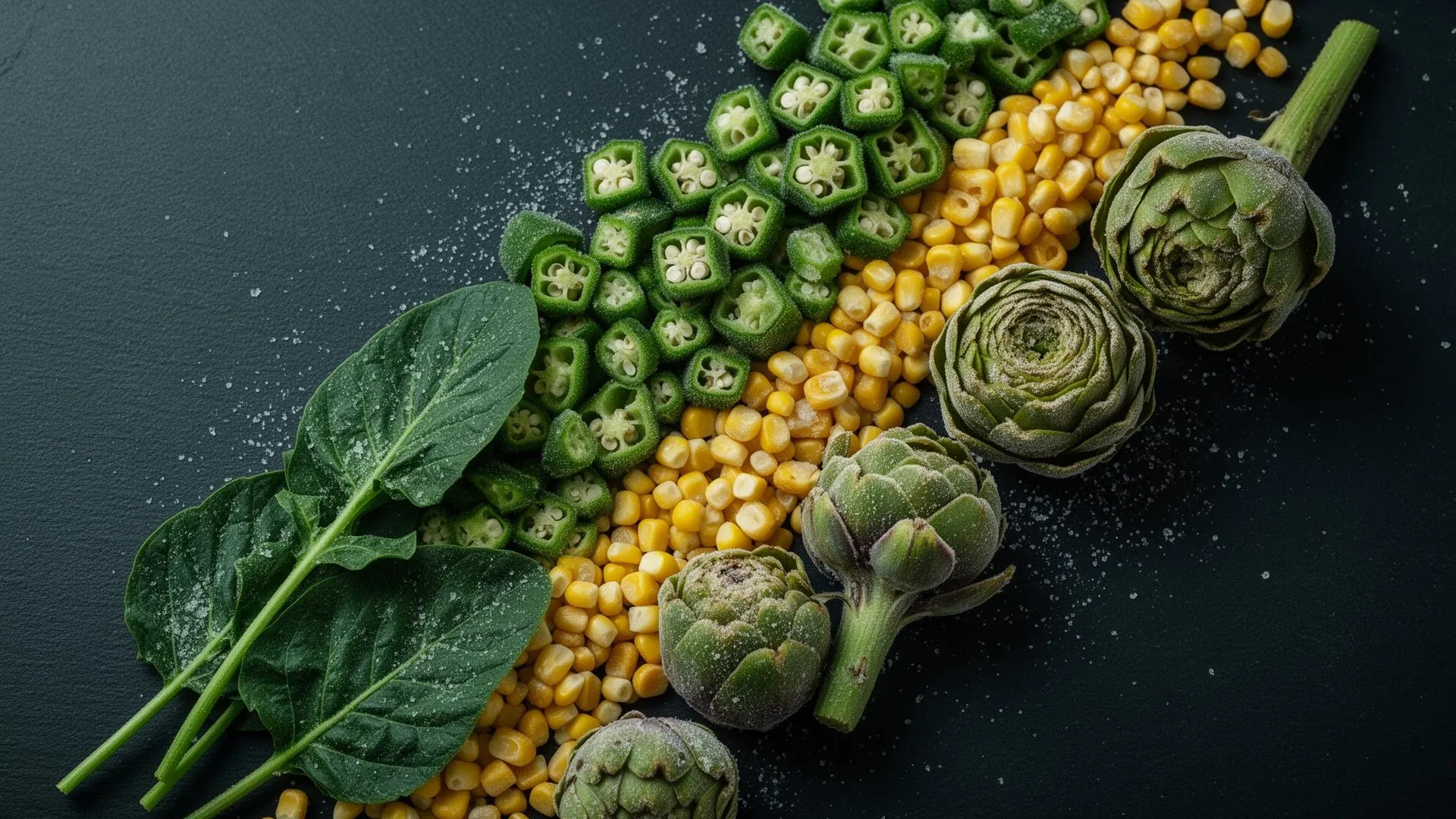
The Complete Guide to Importing Frozen Vegetables from Egypt (2026)
Everything global buyers need to know to source IQF frozen vegetables from Egypt - from supplier vetting to FOB Damietta to landed cost in your warehouse.
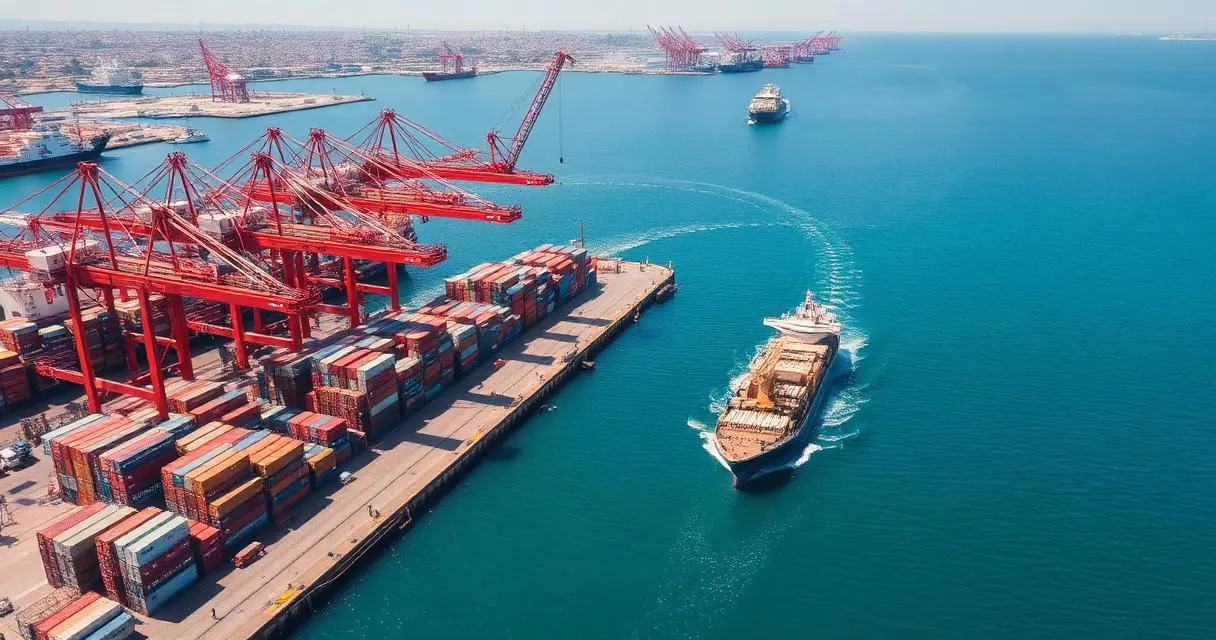
FOB Alexandria vs Damietta: Egyptian Port Comparison for Food Importers
Egypt has two major export ports for food. The right choice depends on your destination, your cargo, and your forwarder's network.