
IQF vs Blast Freezing: A Buyer's Guide to Choosing the Right Process
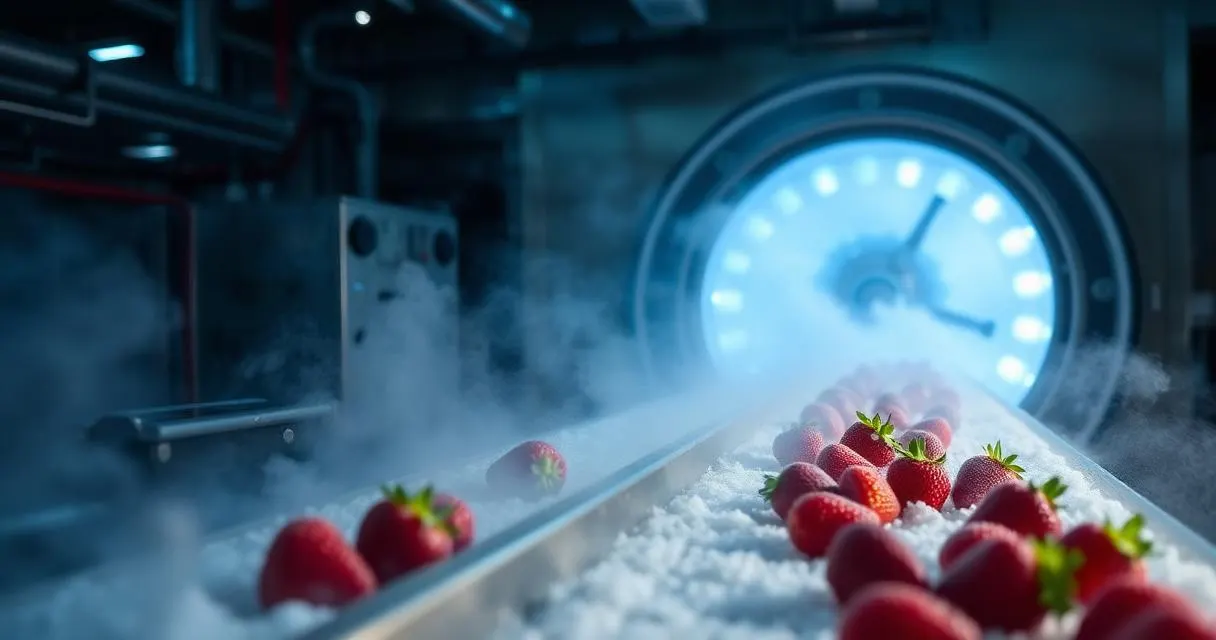
IQF (individually quick frozen) and blast freezing are often used interchangeably in casual conversation, but they describe two distinct industrial processes with measurably different outcomes for product quality, throughput, capex, and end-use suitability. If you are a food manufacturer, retailer, or foodservice buyer specifying frozen produce contracts, the difference between these two processes determines drip loss, cell-wall integrity, free-flow behaviour in your kitchen, and the price-per-finished-kilo of your end product. This guide breaks down the engineering, the trade-offs, and the buyer questions you should be asking your supplier.
What IQF Freezing Actually Is
IQF stands for Individually Quick Frozen. It refers to a freezing process - typically using a fluidised-bed or spiral tunnel freezer - in which each piece of fruit or vegetable is frozen separately while suspended on a stream of -35°C to -40°C air. The result is loose, free-flowing pieces that do not clump together in the bag.
Key engineering specs: - Air temperature: -35°C to -40°C - Air velocity: 4–6 m/s (fluidised-bed) to lift small pieces off the belt - Core temperature target: -18°C in 8–15 minutes (depends on piece size) - Equipment: spiral freezer, belt freezer, or fluidised-bed freezer
The defining outcome is small ice crystals. Because the product passes through the freezing zone quickly, water inside each cell freezes before it has time to migrate and form large crystals that would rupture cell walls. Less rupture means less drip loss on thaw - typically 5–12% for IQF strawberries vs 15–35% for slow-frozen alternatives.
What Blast Freezing Actually Is
Blast freezing is a broader process category. It refers to any freezing process in which the product is exposed to high-velocity cold air (-30°C to -40°C) inside a static room or tunnel - but the product is usually loaded in trays, cartons, blocks, or on pallets, not as individual pieces.
Key engineering specs: - Air temperature: -30°C to -40°C - Air velocity: 3–5 m/s (lower than IQF because the product is stationary, not lifted) - Time to core -18°C: 4–24 hours depending on load thickness and packaging - Equipment: blast freezing room, blast tunnel, plate freezer
Because the product is bulk-loaded, freezing time is much longer than IQF. Pieces in the centre of a block or pallet can take hours to reach -18°C - long enough for water inside cells to migrate and form larger ice crystals. This causes more cell-wall damage, which means more drip loss when the product thaws.
Side-by-Side Comparison
Throughput: IQF tunnels run continuously and can process 2,000–6,000 kg/hr depending on size. Blast freezers are batch processes - load, freeze 4–24 hours, unload - so daily throughput depends on room size and turnover.
Drip loss on thaw (strawberries, 4°C, 12 hr): IQF: 5–12%. Blast (block): 15–35%. The difference compounds: a 25% drip loss means you bought 1,000 kg and ended with 750 kg of usable fruit.
Free-flow in the bag: IQF pieces stay separate. Blast-frozen product clumps or freezes into a solid block. For chefs and manufacturers who need to portion small quantities, IQF is dramatically easier to work with.
Capex: A modern IQF spiral freezer is €1.5M–€4M. A blast freezing room is €150k–€600k. This is why smaller producers default to blast freezing, and why IQF capacity is concentrated in larger export-oriented facilities like the ones Alliance Foods works with in Egypt.
Energy cost per kilo: IQF is faster but uses higher air velocity, so energy per kilo is roughly 0.10–0.18 kWh. Blast freezing is slower with lower velocity - roughly 0.08–0.14 kWh per kilo. The difference is small relative to the quality gap.
Best end uses: - IQF: retail bags, foodservice catering bags, smoothie/dessert applications, anywhere the buyer needs to portion small quantities or the product is consumed visibly (whole strawberries, sliced mango). - Blast (block): jam, juice, concentrate, dairy fruit prep - applications where the product will be cooked or pulped anyway and drip loss matters less.
The Real Cost Economics
Block-frozen produce is typically 25–40% cheaper per kilo FOB than IQF, but the comparison is misleading because of yield. Here is the math on a 20-tonne strawberry purchase:
Scenario A - Block frozen at €1.40/kg FOB: - Purchase: 20,000 kg × €1.40 = €28,000 - Drip loss at thaw (25%): 5,000 kg lost - Usable fruit: 15,000 kg - Effective cost per usable kilo: €1.87/kg
Scenario B - IQF at €1.95/kg FOB: - Purchase: 20,000 kg × €1.95 = €39,000 - Drip loss at thaw (8%): 1,600 kg lost - Usable fruit: 18,400 kg - Effective cost per usable kilo: €2.12/kg
Block still wins on cost-per-usable-kilo for jam and concentrate applications. But for retail packs or dessert applications where the consumer sees whole pieces, the visual quality, free-flow handling, and reduced waste at the point of sale make IQF the better commercial choice.
Need a quote on the products in this article?
Send us your specs and we'll respond with FOB pricing, certifications, and references within one business day.
Questions to Ask Your Supplier
1. Is the product IQF on a spiral or fluidised-bed freezer? (Confirms true IQF, not just "individually frozen on a tray") 2. What is your typical core-temperature time-to-target? (Should be < 15 min for IQF) 3. What is the measured drip loss after standard thaw protocol? (Ask for COA data from recent batches) 4. What is the free-flow score? (Ask for visual evidence - clumping in the bag is a freezing-process problem, not a packaging problem) 5. Are pieces calibrated before freezing? (Calibration before IQF means consistent freeze times across the batch)
Frequently Asked Questions
Is IQF the same as blast freezing?
No. IQF freezes individual pieces in 8–15 minutes on a fluidised-bed or spiral tunnel freezer. Blast freezing is a broader process that freezes bulk-loaded product in a static room or tunnel over 4–24 hours. The result is very different drip loss and free-flow behaviour.
Which is better for jam manufacturing - IQF or blast frozen?
Block-frozen (a form of blast freezing) is typically the more economical choice for jam, juice, and concentrate applications because the fruit is pulped or cooked, and the higher drip loss is recovered as juice. IQF is preferred where the fruit is consumed whole or visibly.
How much more expensive is IQF than block frozen produce?
IQF typically runs 25–40% more expensive per kilo FOB than block frozen. However, when you account for drip loss on thaw, the effective cost per usable kilo is much closer - typically a 10–15% premium for IQF in real-world manufacturing yields.
Can IQF be done at small scale?
Modern spiral and fluidised-bed IQF freezers cost €1.5M–€4M and require continuous throughput to be economical. This is why IQF capacity is concentrated in larger export-oriented facilities. Small producers typically use blast freezing rooms instead.
Source from Egypt with confidence
Alliance Foods supplies importers across Europe, the GCC, the UK, and North America. Get a tailored quote in 24 hours.
Related products
Continue reading
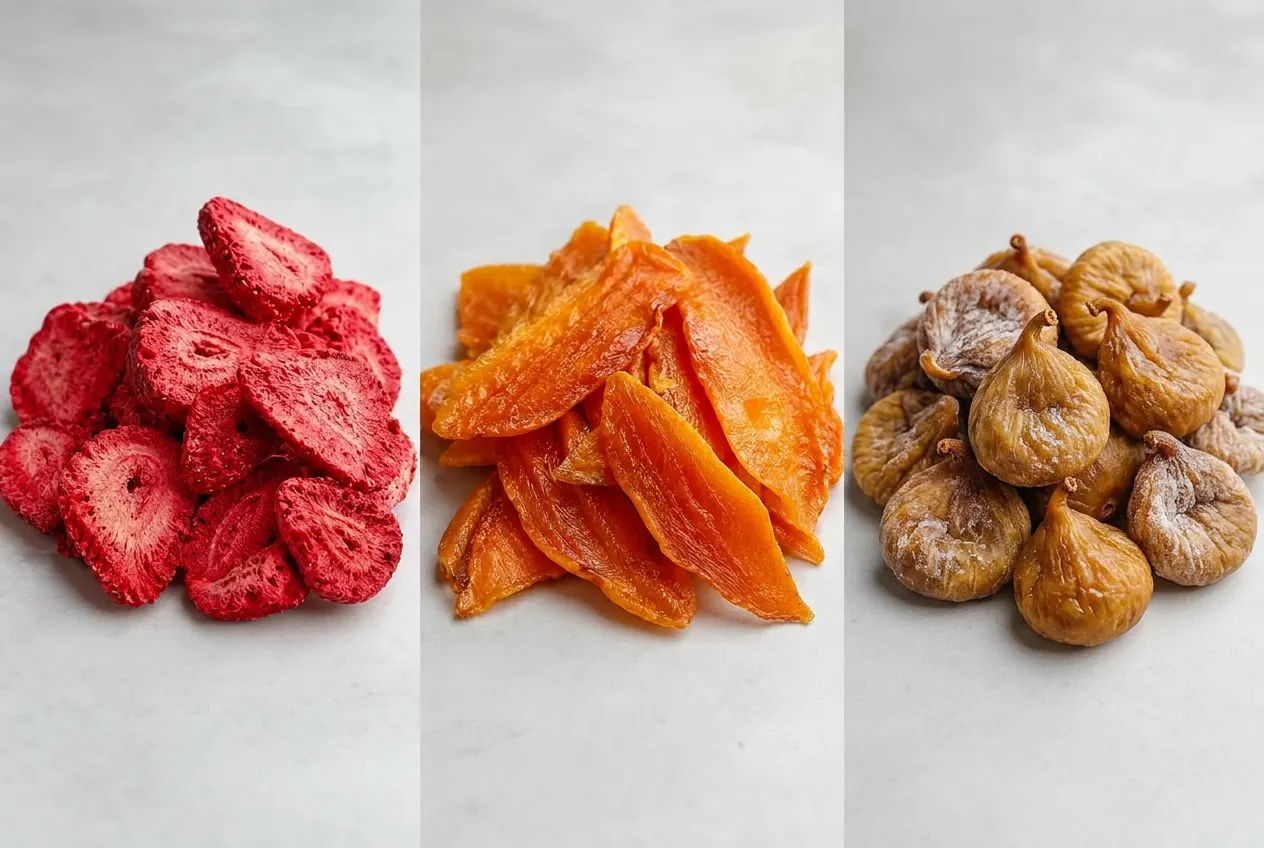
Freeze Drying vs Heat Drying vs Sun Drying: A Buyer's Guide
Three drying technologies, three completely different products. A side-by-side comparison of freeze drying, hot-air heat drying, and sun drying - with the cost, quality, and supply-chain trade-offs that drive the buying decision.
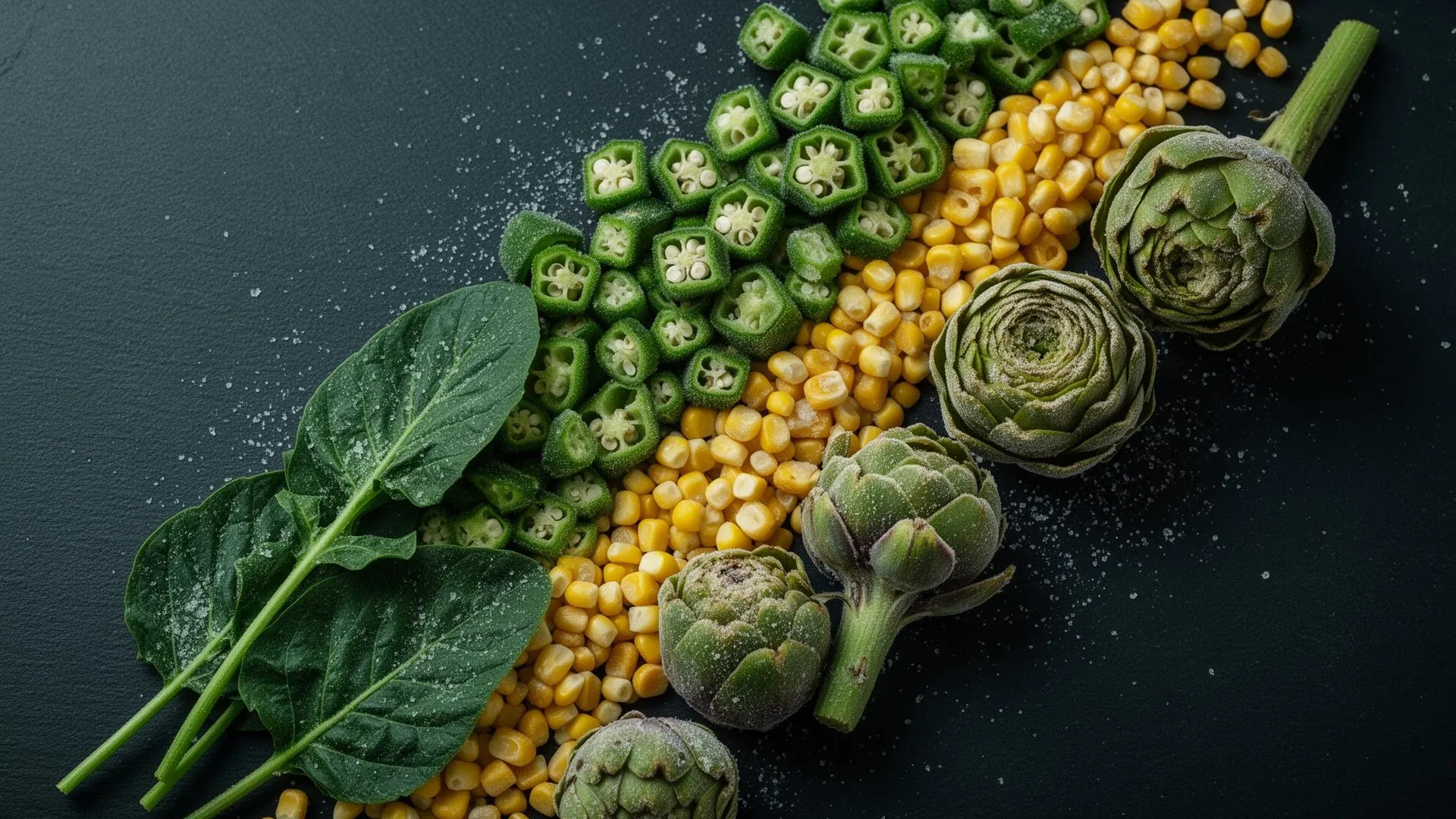
The Complete Guide to Importing Frozen Vegetables from Egypt (2026)
Everything global buyers need to know to source IQF frozen vegetables from Egypt - from supplier vetting to FOB Damietta to landed cost in your warehouse.