
How to Verify an Egyptian Food Supplier: A 2026 Buyer's Checklist
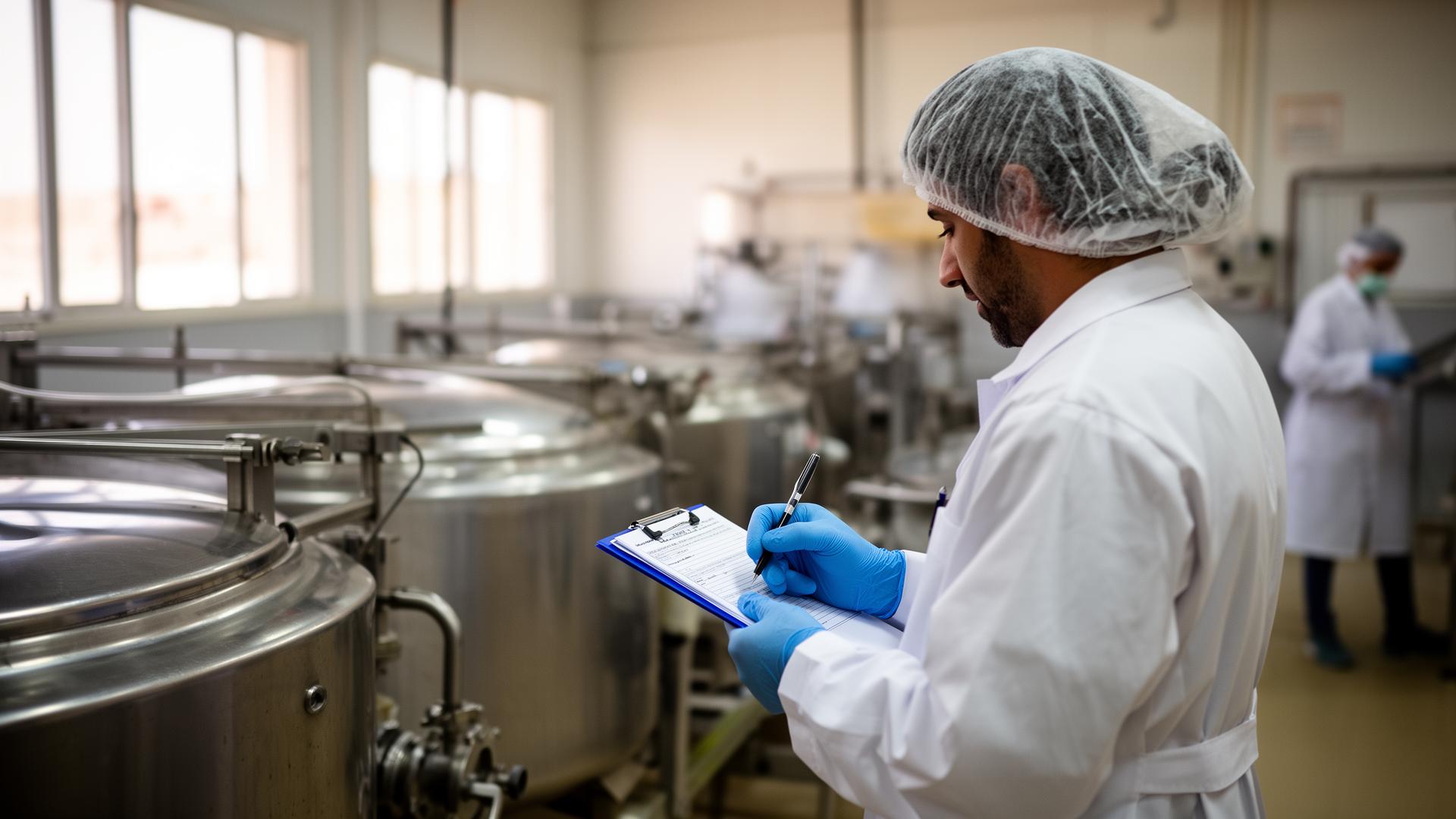
Verifying an Egyptian food supplier in 2026 takes seven concrete steps: confirm commercial registration with GOEIC, validate certifications directly with the issuing body, request a recent factory audit report, secure three buyer references in your region, run a paid sample shipment, agree payment terms that protect both sides, and only then commit to a first commercial container. This checklist walks through each step with the specific documents, contacts, and red flags that separate legitimate Egyptian exporters from the small minority of unreliable players.
Step 1: Confirm Commercial Registration and Export License
Every legitimate Egyptian food exporter is registered with the Egyptian Commercial Registry and holds an export license issued by GOEIC (the General Organization for Export and Import Control).
What to ask for: - Commercial registration certificate (Sigil Tugary) — verify the registration number, company name, legal form, and address - Tax card (Bitaqat Daribiya) — confirms tax ID matches the registration - Industrial registration certificate — required for any company manufacturing or processing food - GOEIC export license — required to legally export food products from Egypt - Membership in the Federation of Egyptian Industries (Food Industries Chamber) — strong positive signal
How to verify: Commercial registration numbers can be checked through the Egyptian Investor Service Centre. Any supplier that hesitates to share these documents or sends documents without registration numbers visible should be treated as a serious red flag. Legitimate exporters share these proactively in the first quote pack.
Step 2: Validate Food Safety Certifications Directly
Egyptian food safety certifications are issued by accredited bodies — never trust a PDF on its own. Always verify directly with the issuing body's online register.
Mandatory minimum for any retail or food-service export: - HACCP — the foundational food safety standard - ISO 22000 or FSSC 22000 — verifiable on the FSSC 22000 public register (fssc.com) - BRCGS Food Safety or IFS Food — required by virtually all EU and UK retailers; verify on BRCGS Directory or IFS Database
Strongly recommended: - Halal — essential for GCC markets, verifiable through the issuing body - Kosher — required for North American kosher channels - EU Organic / USDA NOP / JAS — verify on the relevant control body register (Control Union, CCPB, ECOCERT) - FDA registration and FSVP-ready — required for how to import frozen food from Egypt to USA
Red flag: A certificate that cannot be verified on the issuing body's online register, or whose certificate number doesn't match the supplier's legal name, is either expired, revoked, or fraudulent.
Step 3: Request a Recent Factory Audit Report
Beyond certificates, ask for the most recent third-party factory audit report (within the last 12 months). For BRCGS or IFS Food certified factories, this is the unannounced or scheduled audit report that supports the certificate.
What to look for in the audit report: - Audit grade (BRCGS: AA / A / B / C / D — only AA, A, and B are commercially acceptable for retail; IFS: Higher Level / Foundation Level) - Number of major / minor non-conformities and whether they were closed - Date of audit and date of next scheduled audit - Auditor name and certification body - Factory address — must match the address on the certifications
The visit option. For first commercial relationships involving multiple containers per year, an in-person factory visit is the highest-confidence verification step. The top frozen food factories Egypt operates are clustered in the 6th of October industrial zone (west of Cairo), the Nile Delta governorates of Beheira and Sharqia, and the Alexandria–Borg El Arab industrial belt. A 2-day trip can typically cover 3–4 factory audits.
The remote option. Request a live video tour of the production line, IQF tunnel, cold storage, packing area, and dispatch dock — recorded with timestamp. Reluctance to provide this is a red flag.
Step 4: Get Three Verifiable Buyer References
Ask for three current buyer references in your region or a comparable market. Then actually contact them.
Reference questions to ask the existing buyer: - How long have you been buying from this supplier? - How many containers per year do you import? - Have you had any quality incidents? How were they resolved? - Has the supplier ever missed a shipping deadline? By how much? - How responsive is the supplier on technical questions and claims? - Would you increase your volume with this supplier next year?
Red flag: Suppliers who refuse references, supply only references in unrelated markets (e.g. only African references when you're in the EU), or supply references whose contact details don't verify against LinkedIn or the buyer's company website.
Need a quote on the products in this article?
Send us your specs and we'll respond with FOB pricing, certifications, and references within one business day.
Step 5: Run a Paid Sample Shipment
Before any first commercial container, run a paid sample of 10–25 kg of each product line under consideration. Sample shipments should be paid — free samples create perverse incentives for the supplier to cherry-pick atypically perfect product.
Specify in the sample order: - Exact product specification (cultivar, grade, cut, blanch time, defect tolerance) - Packaging spec (carton, retail pouch, bulk bag) - Production date stamp on packaging - Lot/batch number traceable to a specific production run - Certificate of analysis (microbiology, pesticide residue, heavy metals)
Test the sample for: - Sensory acceptance (colour, aroma, texture after thawing) - Specification compliance (particle size, defect %, foreign matter) - Microbiological compliance (TVC, coliform, E. coli, Salmonella, Listeria) - Pesticide residue against EU MRL or your destination market's MRL list
If the sample passes, the commercial container should match the sample exactly — the lot/batch number on the commercial container's certificate of analysis should be traceable back to the same production line.
Step 6: Agree Payment Terms That Protect Both Sides
Standard for first commercial order: - 30% T/T (telegraphic transfer) deposit on order confirmation - 70% T/T against scan of bill of lading at port of loading
Standard after 2–3 successful shipments: - 100% L/C at sight (Letter of Credit issued by your bank) - Or D/P (documents against payment) at sight
Red flags to walk away from: - Supplier demands 100% T/T upfront before shipment - Supplier demands payment to a personal bank account or to a country other than Egypt - Supplier refuses to accept L/C after a successful initial relationship - Supplier's bank account name does not exactly match the legal company name
Acceptable variations: - Open account (net 30 / net 60) — only after a long, proven relationship - CAD (cash against documents) — common in some Mediterranean trade
For first-time buyers, the 30/70 T/T structure is the industry default and protects both sides.
Step 7: Commit the First Commercial Container
Only after Steps 1–6 are complete should you commit to a first commercial container.
On the first commercial PO, agree in writing: - Exact product specification with no ambiguity (consider a 1-page spec sheet attached to the PO) - Inspection terms — third-party inspection at loading (e.g. Cotecna, Bureau Veritas, SGS) for first 1–2 shipments ($600–$1,200 per container) - Claims procedure — notification window (typically 14–30 days from arrival), evidence required, resolution mechanism - Governing law and arbitration venue (commonly ICC arbitration in Paris, London, or Cairo) - Force majeure scope and exclusions
On arrival of the first commercial container: - Document everything — temperature on arrival, container seal, pallet condition, carton condition - Take random samples for in-house QC against your spec - Send samples for independent lab testing if specification claims warrant - Communicate results to the supplier within 14 days
A supplier who passes Steps 1–6 and delivers a first container that matches specification is, in 95%+ of cases, a supplier you can build a multi-year programme with.
Frequently Asked Questions
How do I verify an Egyptian food exporter is legitimate?
Run a 7-step verification: confirm commercial registration and GOEIC export license, validate food safety certifications directly with the issuing body's online register (BRCGS, IFS, FSSC 22000, Halal), request a recent third-party factory audit report, get three verifiable buyer references in your region, run a paid sample shipment, agree protective payment terms (30/70 T/T or L/C), and use third-party loading inspection on the first commercial container.
How do I check if an Egyptian supplier is FSSC 22000 certified?
FSSC 22000 certified food supplier Egypt status can be verified on the public FSSC 22000 register at fssc.com. Search by company name or certificate number. The register shows the certified site address, certification body, certificate validity dates, and scope of certification.
Where are the top frozen food factories in Egypt located?
The top frozen food factories Egypt operates are clustered in three industrial zones: the 6th of October City zone (west of Cairo), the Nile Delta governorates of Beheira and Sharqia, and the Alexandria–Borg El Arab industrial belt near the port.
What payment terms should I use with a new Egyptian food supplier?
Industry standard for a first commercial order is 30% T/T deposit on order confirmation and 70% T/T against scan of bill of lading. After 2–3 successful shipments, transition to 100% L/C at sight or D/P. Never pay 100% upfront before shipment.
Should I visit the factory before placing my first order?
For first commercial relationships involving multiple containers per year, yes — an in-person factory visit is the highest-confidence verification step. A 2-day trip to Egypt can typically cover 3–4 factory audits in the 6th of October, Beheira, or Alexandria clusters.
What certifications must an Egyptian supplier hold to export to the USA?
To import frozen food from Egypt to USA, the supplier must hold a current FDA Food Facility Registration and be capable of supporting your FSVP requirements. Beyond FDA basics, FSSC 22000 or BRCGS certification, HACCP, and product-specific certificates of analysis are commercially expected.
What are the biggest red flags when vetting an Egyptian food supplier?
Five red flags: refusal to share commercial registration documents, certificates that don't verify against the issuing body's online register, refusal to provide three current buyer references, demand for 100% payment upfront before shipment, and a bank account name that doesn't match the supplier's legal company name.
How long does the full supplier verification process take?
From first contact to placing a first commercial order, allow 6–10 weeks: 1–2 weeks for documentation review and certification verification, 1 week for reference calls, 3–5 weeks for paid sample production and lab testing, and 1–2 weeks for first commercial PO negotiation.
Source from Egypt with confidence
Alliance Foods supplies importers across Europe, the GCC, the UK, and North America. Get a tailored quote in 24 hours.
Related products
Continue reading
HACCP Certification Explained: A Practical Guide for Food Importers
HACCP is the foundational food safety framework most exporters claim — but verifying the claim takes more than reading a certificate.
The Complete Guide to Importing Frozen Vegetables from Egypt (2026)
Everything global buyers need to know to source IQF frozen vegetables from Egypt — from supplier vetting to FOB Damietta to landed cost in your warehouse.