
Egypt's Year-Round Produce Calendar: The Buyer's Advantage
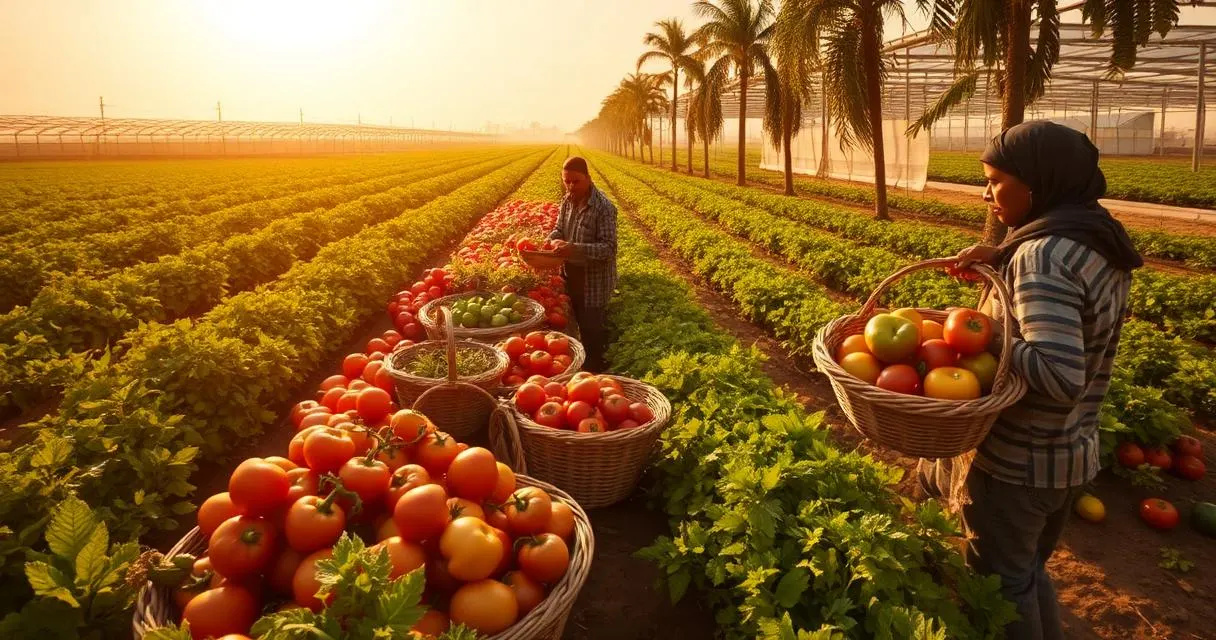
Most agricultural origins have a clear season - a peak two or three months when the product is abundant and cheap, and nine or ten months when it's expensive, scarce, or unavailable. Egypt is structurally different. Its combination of three distinct climate zones, the Nile irrigation system, and 320+ days of sunshine per year means continuous production across nearly every export produce category. For buyers, this isn't a marketing claim - it's a practical advantage that changes how you plan inventory, lock contracts, and manage cash flow. This article breaks down how Egypt's calendar actually works and what to do with the information.
The Three-Zone Production Model
Egypt's agricultural production is organized across three geographic-climatic zones that produce on different calendars. This is the underlying mechanism that delivers year-round supply.
Nile Delta (Lower Egypt): Beheira, Kafr El Sheikh, Dakahlia, Sharqia. Mediterranean climate, fertile alluvial soil, the densest agricultural population in the country. Produces strawberries (Nov–May), green beans (Oct–Jun), peppers (Sep–May), and the bulk of Egypt's leafy greens and herbs year-round. This is where most frozen-vegetable processing capacity is located.
Middle Egypt (Beni Suef, Minya, Asyut): Transitional climate, longer growing seasons, lower humidity. Produces onions, garlic, tomatoes, and potatoes for both fresh export and processing into pastes and concentrates. Strong artichoke and okra production.
Upper Egypt and the new reclaimed lands (Aswan, Luxor, Toshka, East Owainat): Hot, arid, intensely sunny year-round. Produces table grapes, dates, mangoes, and counter-seasonal vegetables under modern irrigated farming. This is where winter production fills gaps that the Delta cannot due to cooler nights.
The three zones overlap in some products and complement each other in others - and the result is that for almost any Egyptian export crop, there is fresh raw material available somewhere in the country during 10–12 months of the year.
What Ships from Egypt Each Month
A simplified view of when major export categories peak from Egypt:
January–March: Strawberries (peak), green beans, peas, broccoli, cauliflower, citrus (oranges, mandarins), artichokes, onions, garlic.
April–June: Strawberries (tail), mangoes (early varieties starting May), potatoes (new crop), grapes (early), tomatoes, watermelon, peppers, okra (starting May).
July–September: Mangoes (peak), grapes (peak), pomegranates (starting Sep), figs, dates (starting Aug), okra (peak), tomatoes, herbs, frozen-stock vegetables shipping from cold storage.
October–December: Pomegranates, dates, oranges (new crop starting Nov), strawberries (starting Nov), broccoli, cauliflower, peas, green beans, onions, garlic, leafy greens.
Continuous (12 months): Onions, garlic, herbs (parsley, dill, mint), molokhia (frozen from cold storage), frozen okra, frozen mixed vegetables - all shipping year-round from processing inventory.
For a buyer, the practical implication is that Egyptian supply can be locked in as a primary source for most categories, with only narrow gap windows that need bridging from other origins.
The Fresh-to-Frozen Bridge
Egypt's year-round advantage is amplified by the close integration between fresh production and frozen processing. Many of Egypt's largest producers operate both fresh export and IQF lines from the same facility, which means:
- Off-spec fresh product (size, cosmetic defects) feeds the IQF line rather than being wasted, lowering frozen processing cost
- Peak-season abundance is captured into frozen inventory that ships throughout the off-season
- Flexible product mix - buyers can shift between fresh and frozen formats with the same supplier as their needs change
- Single-supplier consolidation - buyers can fill a mixed reefer container with both fresh and frozen items from one facility
This integration is harder to find with European or North American suppliers, who typically specialize in either fresh or frozen but not both at meaningful scale.
What Year-Round Supply Means for Buyer Planning
Sophisticated importers use Egypt's calendar advantage in three specific ways:
1. Lower safety-stock requirements. When the same supplier can ship the same product 10–12 months a year, you don't need to build 6–9 months of inventory to bridge a long off-season. Working capital tied up in frozen inventory drops by 30–50% versus single-season-origin sourcing.
2. Annual contract pricing instead of spot pricing. Egyptian processors will lock 12-month volume contracts at fixed FOB pricing because they have continuous production to commit to. Buyers using spot pricing typically pay 10–18% more on a blended basis across the year.
3. Origin-diversification within a single country. Because production sits in multiple climate zones, weather risk in one zone (e.g. unusual cold in the Delta) doesn't shut down all Egyptian supply. Buyers concerned about origin concentration can effectively get geographic diversification within Egypt itself.
Need a quote on the products in this article?
Send us your specs and we'll respond with FOB pricing, certifications, and references within one business day.
The Nile: Why Water Isn't the Constraint It Looks Like
Buyers occasionally raise water as a concern when sourcing from Egypt, given the country's arid climate. The reality on the ground is different.
The Nile delivers a stable, year-round irrigation supply through a centuries-old canal network and modern drip-irrigation systems. Agricultural water is allocated, monitored, and priced by the government. New land reclamation projects use modern center-pivot and drip systems with 30–50% lower water-per-tonne ratios than open-flood irrigation.
For practical purposes, water availability is not a supply risk for established Egyptian producers - and the country is investing heavily in efficiency rather than expansion of irrigated area, which keeps the existing production base secure.
Climate-change risk is real but applies similarly to every major produce origin globally, and Egypt's investment in modern irrigation gives it more adaptive capacity than many competing origins.
Egypt vs Other Year-Round Origins
The serious year-round competitors to Egypt for European and GCC buyers are Morocco, Spain, Turkey, and (for some categories) Peru and Mexico.
Versus Morocco: Similar counter-seasonal advantage to Europe. Egypt typically lower in cost (15–25% on frozen strawberries, similar gap on green beans). Morocco has an edge on EU certification depth and has been in the market longer.
Versus Spain: Spain has stronger logistics integration with Northern Europe but is structurally higher cost, and its production calendar overlaps with Northern European production rather than complementing it.
Versus Turkey: Turkey is competitive on certain categories (apricots, figs, tomato paste) but has higher cost on labor-intensive items (strawberries, green beans, okra). Currency volatility has historically created planning challenges for Turkish FOB contracts.
Versus Peru and Mexico: Strong on specific categories (Peruvian asparagus, Mexican avocados and berries) but freight cost to European destinations is 2–3× Egyptian freight, which neutralizes the FOB advantage.
For the European and GCC buyer building a year-round program across multiple categories, Egypt typically delivers the best blended cost-quality-reliability mix.
Frequently Asked Questions
Does Egypt produce fresh produce year-round?
Yes. Egypt's three climate zones (Nile Delta, Middle Egypt, Upper Egypt and reclaimed lands) produce on different calendars, delivering continuous fresh and frozen produce supply 10–12 months per year across nearly every major export category.
What is Egypt's best produce export season?
Peak export volume runs January–April for frozen vegetables and strawberries, and June–September for mangoes, grapes, dates, and okra. However, processing inventory means frozen product ships year-round.
How does Egypt compare to Morocco for produce sourcing?
Egypt is typically 15–25% lower in FOB cost on frozen strawberries and similar on green beans, with a larger and more diversified production base. Morocco has longer-established EU certification depth on certain categories. Many large buyers source from both for redundancy.
Is water availability a risk for Egyptian agricultural exports?
For established producers using Nile irrigation and modern drip systems, water availability is not a meaningful supply risk. Egypt's investment in irrigation efficiency continues to lower water-per-tonne ratios across the export production base.
Can I get a 12-month fixed-price contract from an Egyptian supplier?
Yes - top-tier Egyptian processors offer 12-month fixed FOB pricing on contracted volumes because they have continuous year-round production. This typically delivers 10–18% lower blended cost than spot-market purchasing across the year.
Source from Egypt with confidence
Alliance Foods supplies importers across Europe, the GCC, the UK, and North America. Get a tailored quote in 24 hours.
Related products
Continue reading
Why Egypt Leads Global Frozen Strawberry Exports
Egypt now sits behind only Morocco and Mexico in global frozen strawberry exports. The reasons aren't accidental - they're climate, cultivar selection, harvest timing, and a cost structure no European origin can match.
The Complete Guide to Importing Frozen Vegetables from Egypt (2026)
Everything global buyers need to know to source IQF frozen vegetables from Egypt - from supplier vetting to FOB Damietta to landed cost in your warehouse.